Are you wondering how long you will be without heat or AC during a condo HVAC upgrade? We know that a Magic-Pak PTAC Replacement can sound like a major disruption to your day.
Most property managers and residents ask us this exact question. A typical Magic-Pak unit has a lifespan of about 15 to 20 years.
The good news is that a planned swap usually takes just a few hours. Grab a cup of coffee, and let’s go through the typical installation steps together.
How a Magic-Pak PTAC Replacement Day Runs
Our team always schedules replacements to respect your building’s specific noise rules. Most condo boards in Ontario restrict heavy work to weekdays between 9 AM and 5 PM.
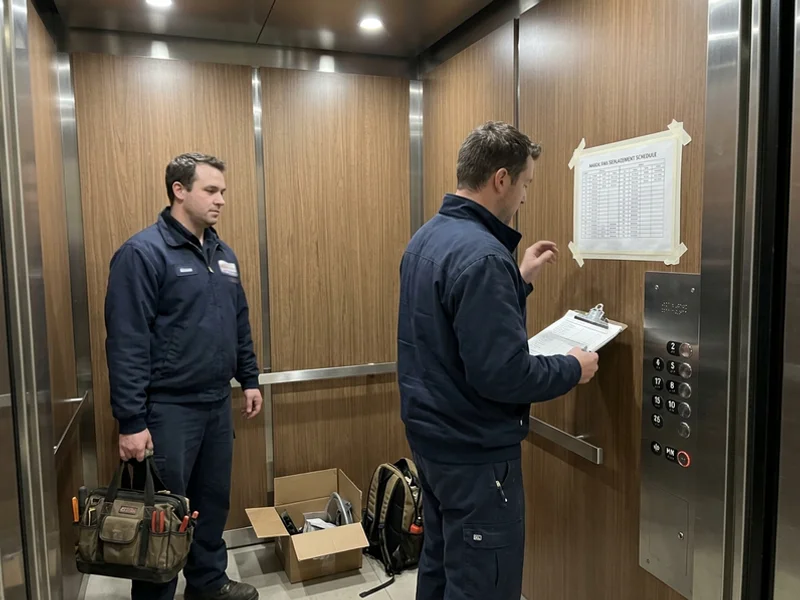
We coordinate directly with your concierge to book the service elevator within these allowed times. This preparation keeps you in good standing with the property management.
Here is how a typical installation day runs.
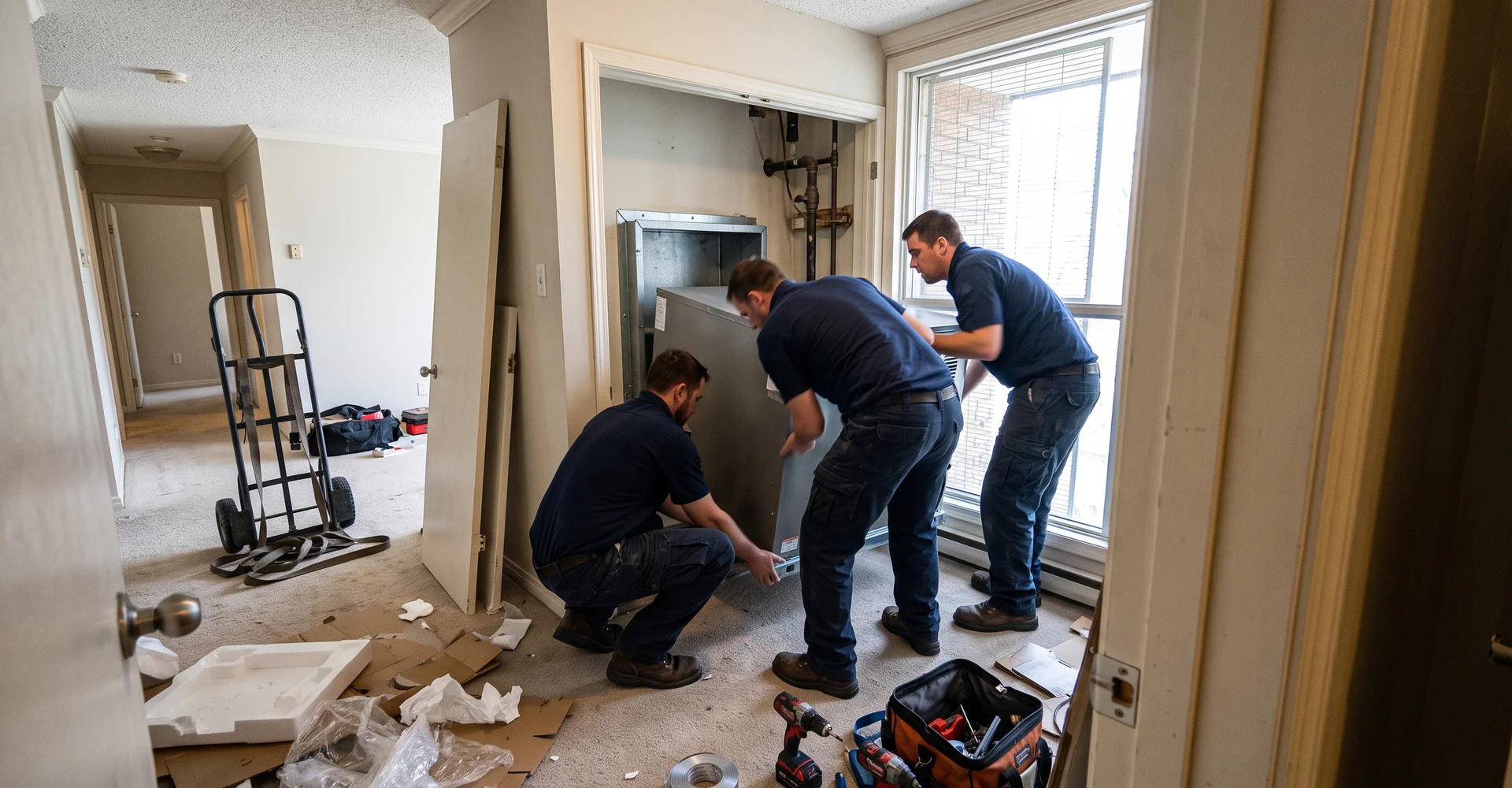
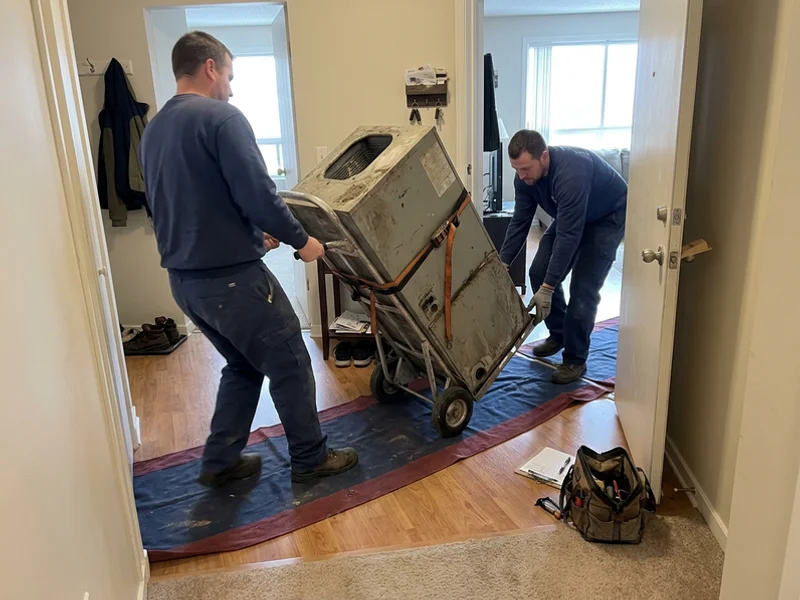
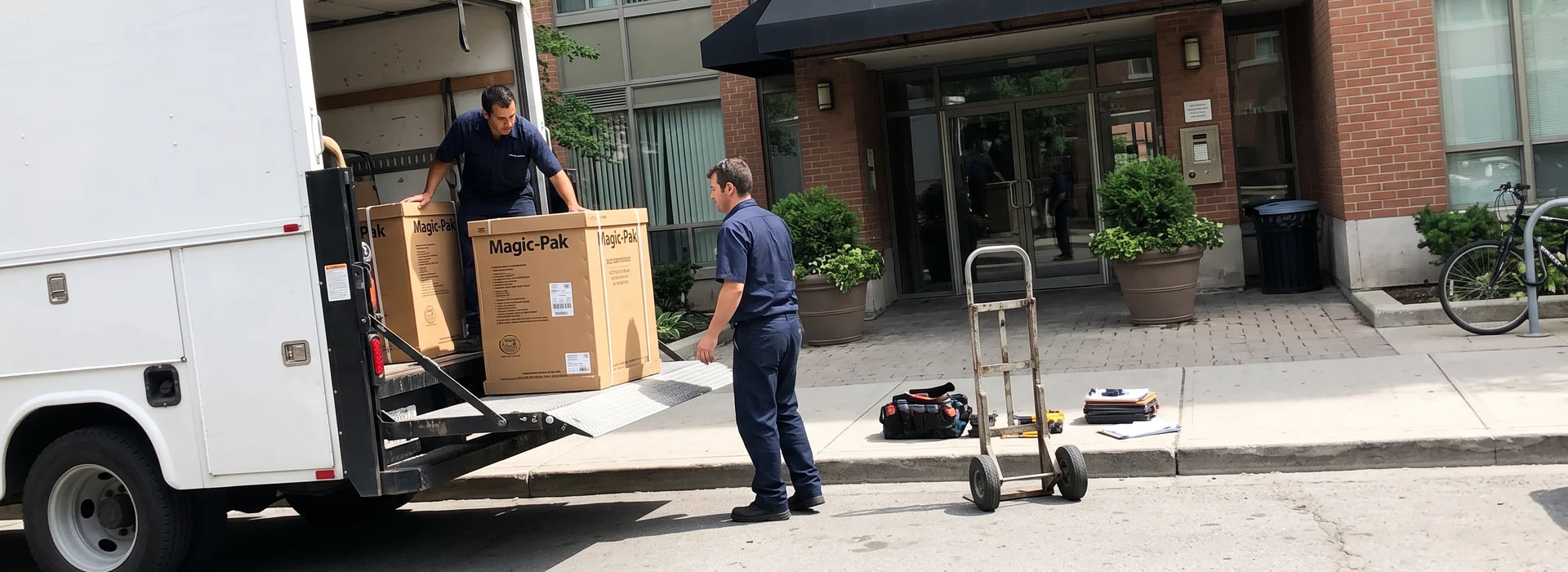
- Arrival and protection. The crew checks in with the superintendent, uses the booked service elevator, and lays floor protection from your door to the closet.
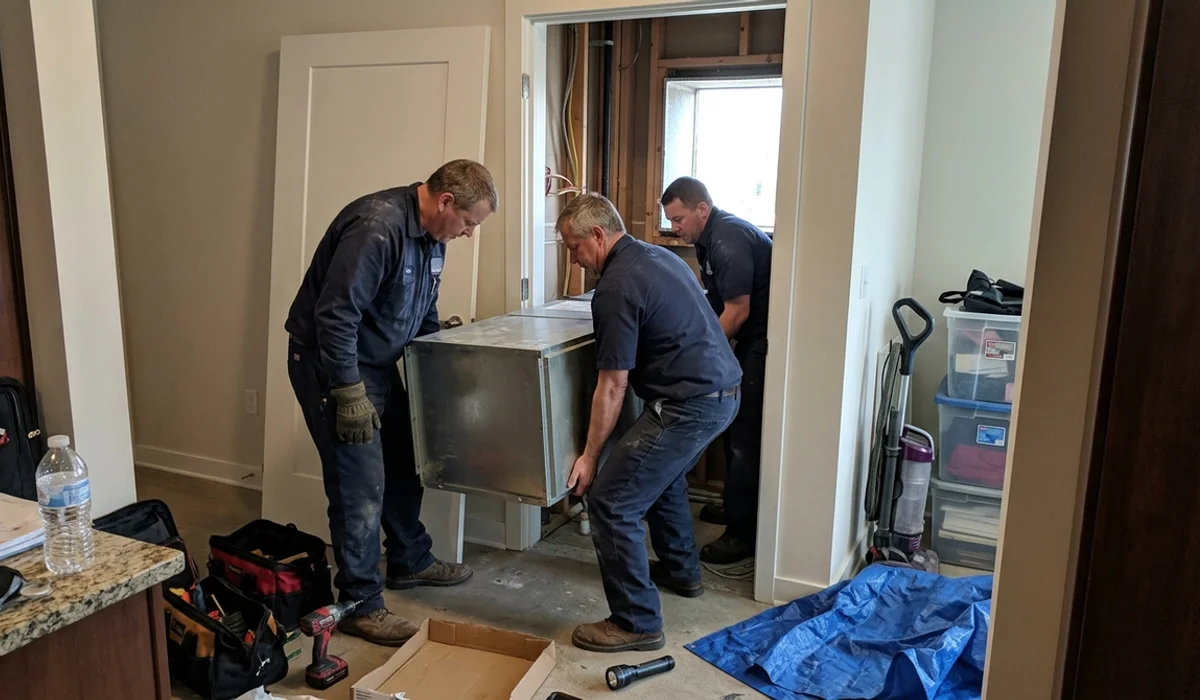
- Disconnect and remove. Gas is shut off and capped, power is isolated, and refrigerant is recovered. The old unit is pulled from the closet and taken out of the building.
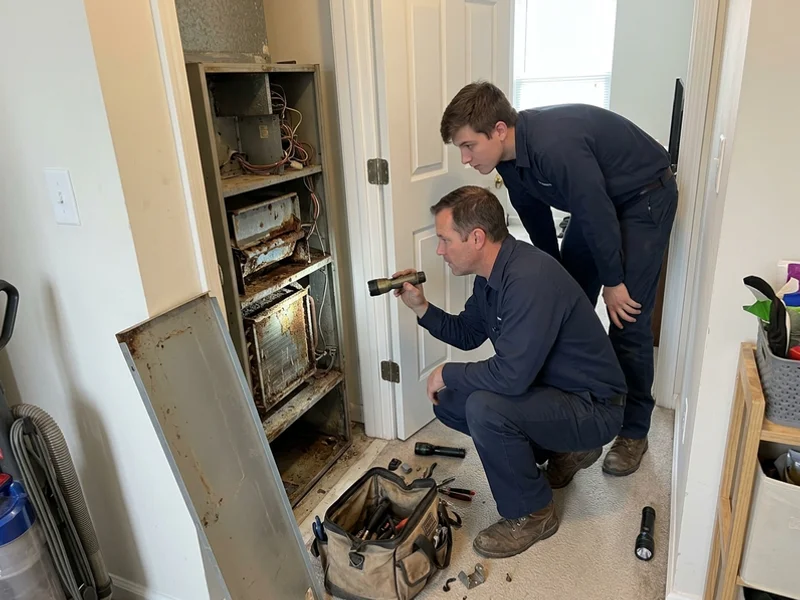
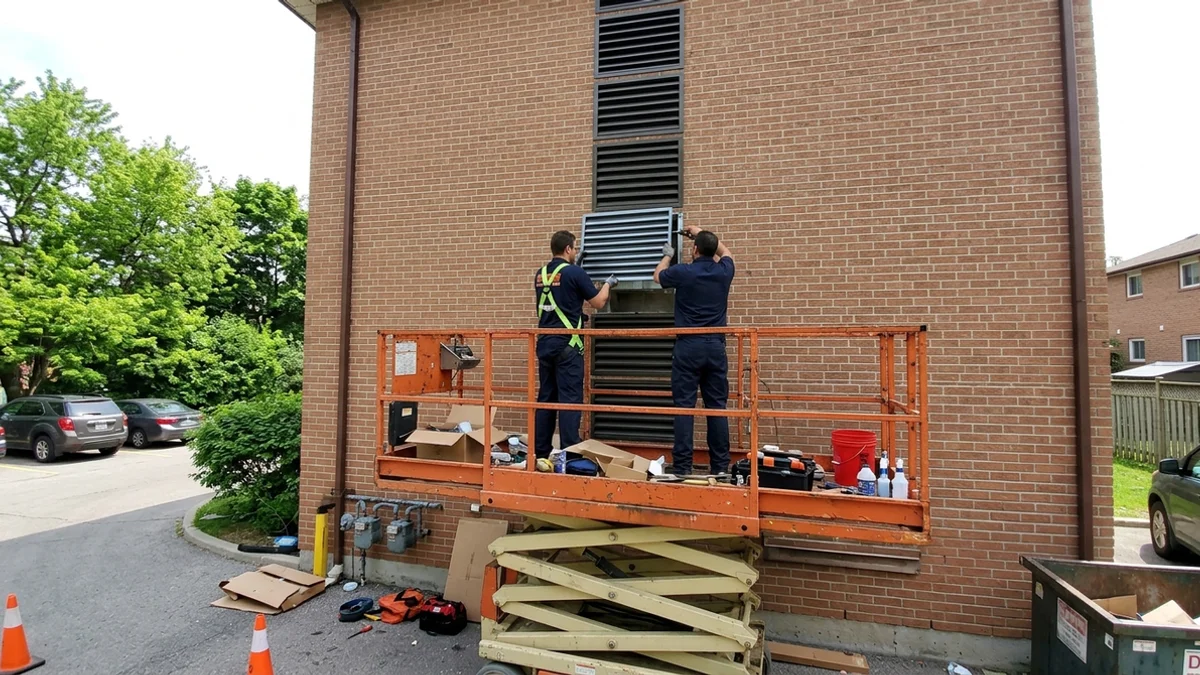
- Prepare the opening. The wall sleeve and closet are cleaned and checked for damage. The louver is inspected or replaced to match the new unit.
- Set and connect. The new equipment is set in place, levelled, and completely sealed. Gas, electrical, condensate, and thermostat connections are made safely.
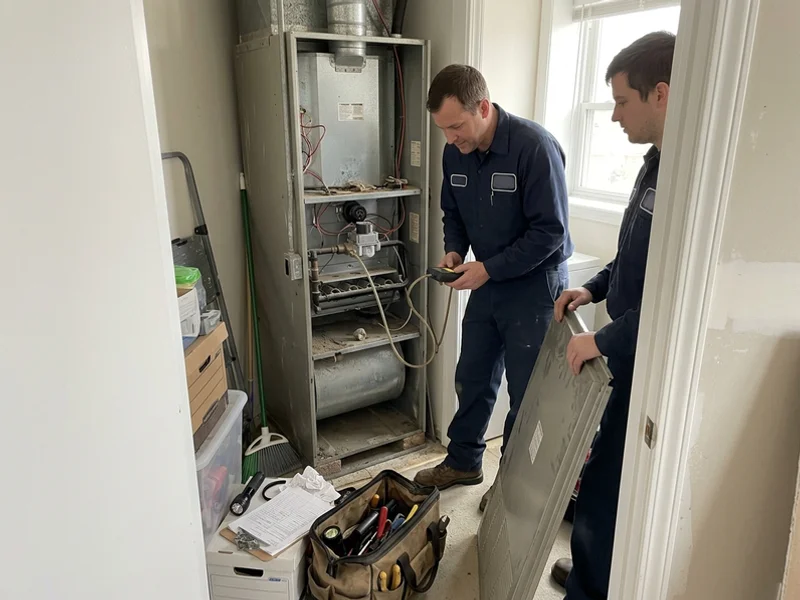
- Test and sign off. The gas technician leak tests every joint, checks manifold pressure, and runs the unit in heating and cooling modes. The sign-off record is left for your suite file.
Most suites are back to normal by mid-afternoon.
On full-floor replacement programs, building management posts the schedule in the elevator in advance so residents know exactly what to expect.
HWC vs MGE vs MCE: Choosing the Right Series
We install several different Magic-Pak series based on your building’s infrastructure. The right choice depends entirely on the utilities supplied to each specific utility closet.
Newer models offer impressive efficiency upgrades over systems built twenty years ago. The MGE9 series now delivers up to a 95% AFUE rating for natural gas heating.
We often recommend these units because they feature a patented FreezeShield technology that prevents condensate from freezing during harsh Canadian winters.
Here is a breakdown of the three main options.
| Series | Heating source | Cooling | Best fit |
|---|
| HWC | Building hot water loop | Built-in compressor | Buildings with a hydronic heating loop to each closet |
| MGE | Natural gas, direct-vent | Built-in compressor | Buildings with gas to each suite and existing gas units |
| MCE | Electric heat kit | Built-in compressor | Buildings without gas or hot water at the closet |
Switching your primary heating type is technically possible, but it is rarely worth the investment on a replacement. A complete conversion requires new gas or water piping, expensive municipal permits, and strict condo board approval.
We typically replace your equipment like for like with a newer model in the exact same series. You will enjoy a quieter system with a smaller footprint and better energy efficiency.
An Enbridge Red Tag serves as a strict safety notice for your gas appliances. A licensed technician must issue this tag if they find equipment that is unsafe or fails to meet the current Ontario gas code.
There are two distinct types of warnings you might receive:
- Type A Tag: This means there is an immediate danger, like a severe carbon monoxide leak or a cracked heat exchanger. The technician is legally required to shut off your gas supply immediately.
- Type B Tag: This indicates a non-immediate hazard, such as a minor venting issue or improper clearances. You generally have up to 42 days to correct a Type B issue before the utility company disconnects your gas.
We often see Type B tags when a previous installation did not strictly follow the code. A tag issued in the middle of January quickly turns into a no-heat emergency.
We inspect the unit thoroughly and explain in writing whether the best fix is a repair or a complete replacement. The necessary work is then performed to correct the violation.
Our technicians complete all the required paperwork so the safety tag can be cleared quickly. If several units in one building are tagged or reaching the end of their 20-year lifespan, property managers can schedule them together to secure bulk pricing.
For buildings planning a wider program, see condo HVAC replacement. A prompt Magic-Pak PTAC replacement keeps your property comfortable and compliant with all local safety codes.
We are here to make the entire process smooth from the initial inspection to the final sign-off. Reach out today to schedule your consultation and get a detailed quote for your building.