Have you ever wondered why your condo feels like a sauna while your neighbour is perfectly comfortable? Our team sees this frustration every single day across Toronto. Heating and cooling in a high-rise works a bit differently than a detached house.
A condo suite does not have its own standalone furnace and air conditioner.
We know that this shared connection is the part most residential contractors miss during a condo HVAC repair. In most Toronto buildings, a central plant uses boilers and a cooling tower to pump water through vertical pipes called risers. Your suite equipment simply taps into those risers.
We are going to walk you through the exact steps to get it running smoothly, including:
- Pinpointing where the issue starts.
- Identifying your specific closet equipment.
- Understanding who pays for the repair.
Grab a cup of coffee, and let’s figure this out together.
HVAC for Condo Buildings: How Suite Equipment Ties Into the Building Loop
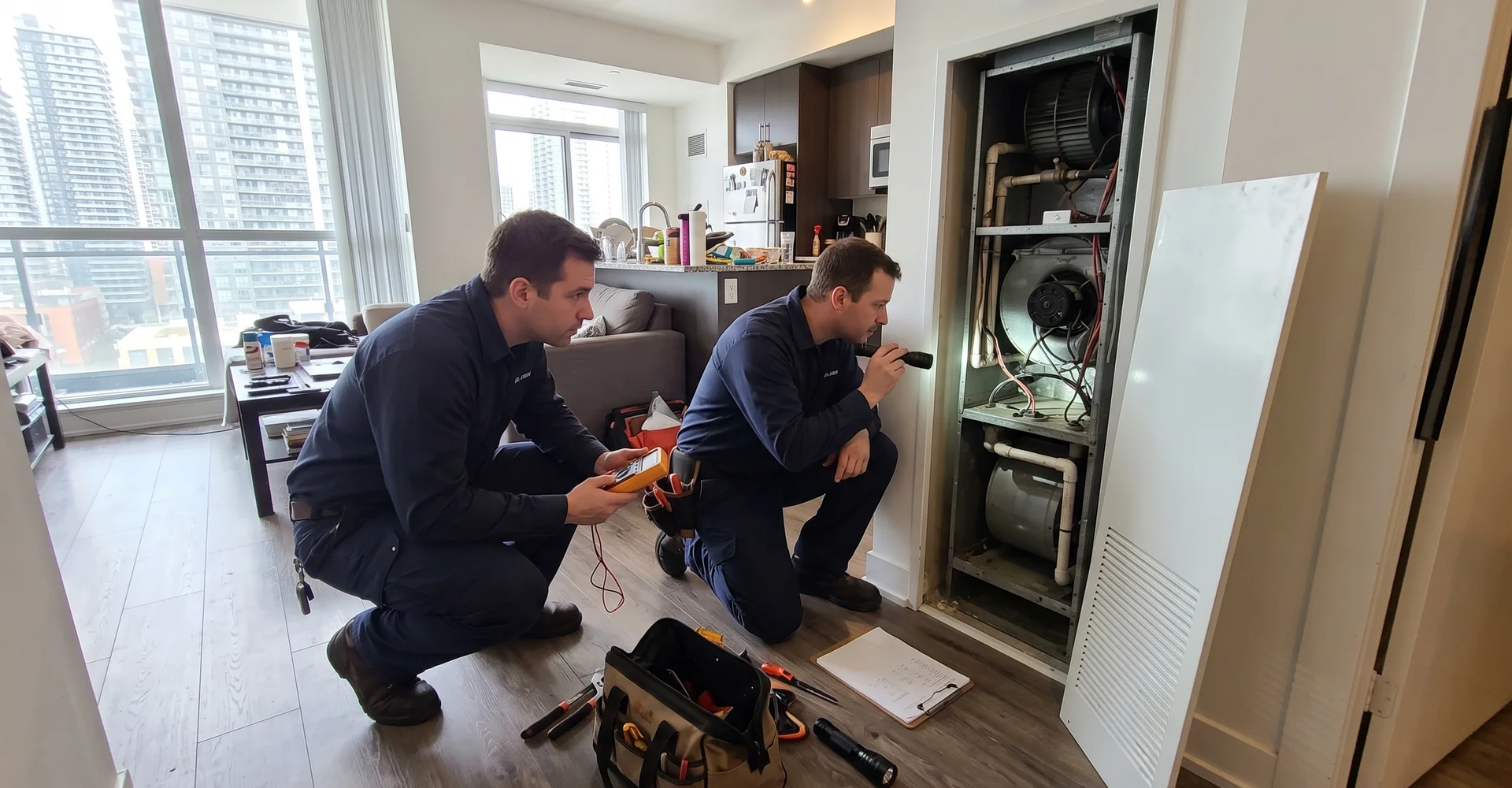
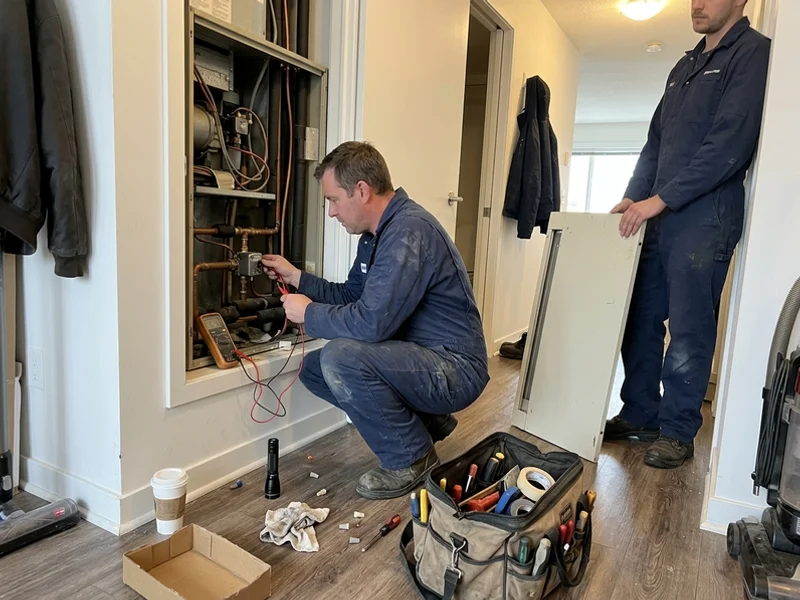
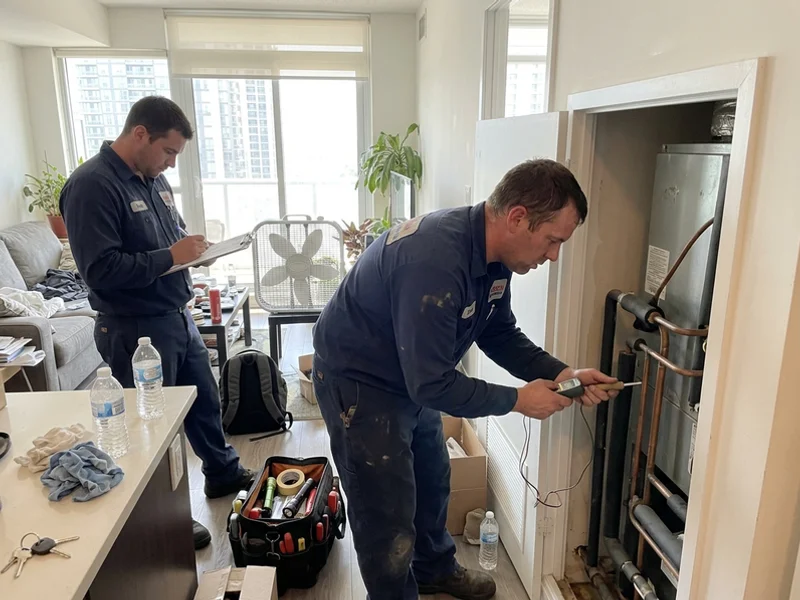
When a suite is too warm, the cause can sit in one of three places. A thorough diagnostic always starts with readings at the coil to pinpoint the exact issue.
We use this method to give boards and property managers real data instead of complaints.
The Building Plant or Loop
Low flow, the wrong water temperature, or a failed primary pump can cause major comfort issues. This section is usually a common element and belongs to the condo corporation.
Our technicians see older towers from the 1970s and 1980s running a 2-pipe system with one supply and one return riser. The building switches over in spring and fall, causing a few weeks of discomfort during the changeover. Newer Toronto buildings may use a 4-pipe system with separate hot and chilled water, allowing each suite to heat or cool on demand.
The Connection to Your Suite
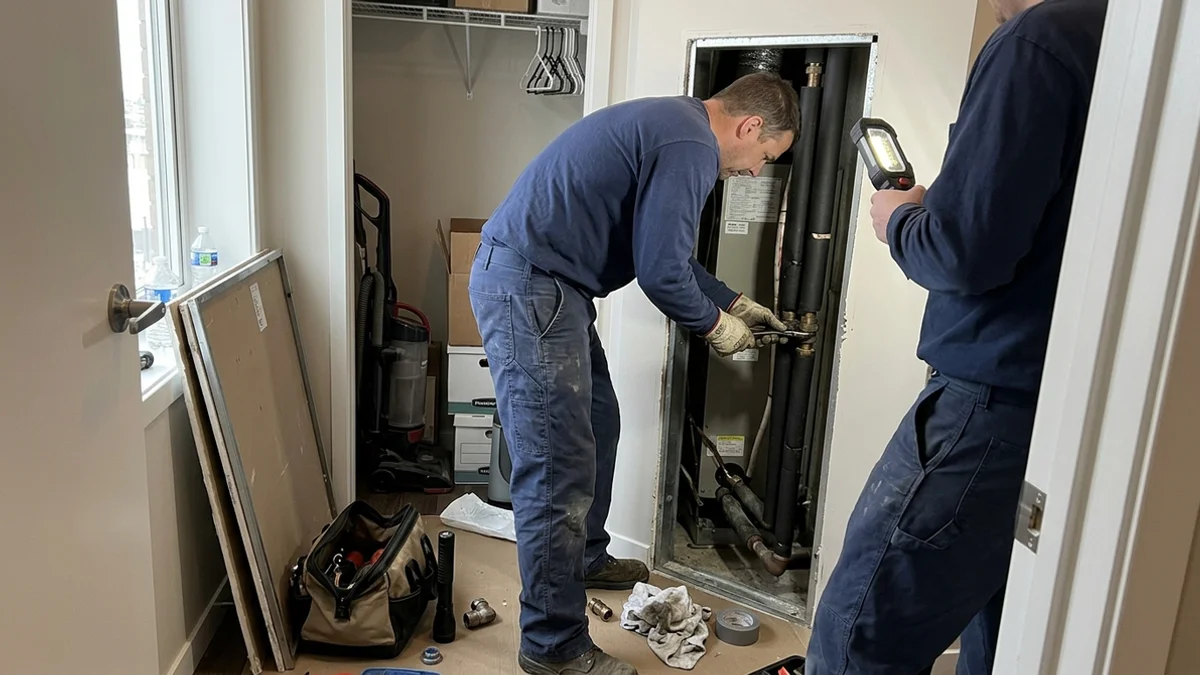
Your system connects to the building loop using isolation valves, strainers, balancing valves, and a zone valve. The zone valve opens and closes on demand to regulate the temperature.
We always check these connection points first, because a seized actuator valve is a frequent culprit for weak airflow. Responsibility for these parts varies by your specific condo declaration.
Your In-Suite Unit
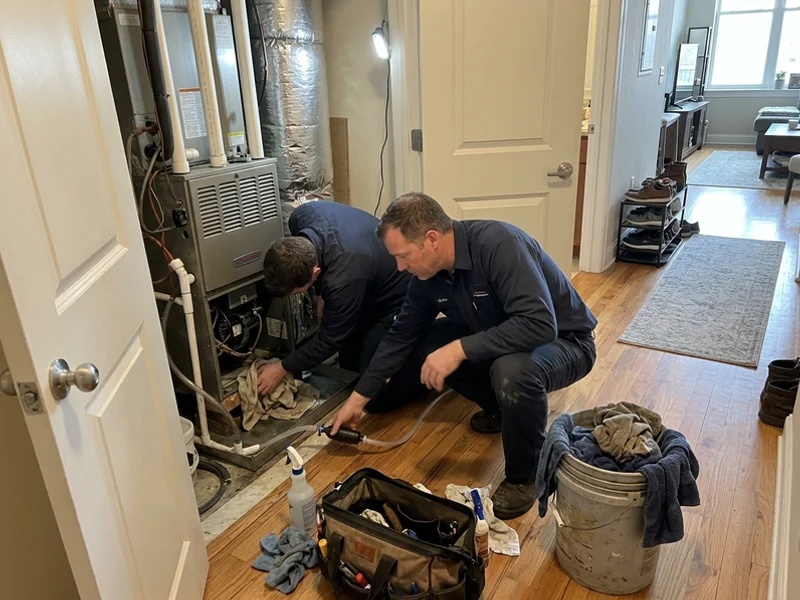
The coil, blower motor, drain pan, controls, and thermostat make up the equipment inside your closet. In many Toronto buildings, this hardware is the owner’s responsibility.
Our team recommends keeping furniture at least two to three feet away from your unit so air can move freely. Water-source heat pump buildings run a moderate loop temperature all year, and each suite has its own compressor. A heat pump suite can cool in March while the neighbour heats, but it requires regular checks on the reversing valve and refrigerant.
This is exactly why a proper inspection starts with water temperature readings. If water arrives correctly, the fault is in your unit and the repair falls to the owner.
We document any building-side issues and notify your property manager immediately. Owners never pay for repairs that were not theirs to begin with.
Magic-Pak vs Fan Coil vs Heat Pump: Which System Is in Your Suite?
If you are not sure what you have, the closet usually tells you. Here is a quick way to tell the three main systems apart.
We put together this simple guide to help you identify your equipment.
| What you see | Likely system | What it means for repairs |
|---|
| Tall closet cabinet, two insulated pipes at the bottom, a small valve and a drain pan | Vertical fan coil | Heating and cooling come from building water. Valves, motors, pans and scale are the common repairs. |
| Closet unit with a compressor hum, braided hoses and a slide-out chassis | Water-source heat pump | Your unit has its own refrigerant circuit. Reversing valves, contactors and hoses are the common repairs. |
| Self-contained box against an exterior wall with an outside louver, often with a gas line | Magic-Pak PTAC | Through-the-wall packaged unit. Gas sign-off and Red Tags apply; many 1990s units are due for replacement. |
| Ceiling bulkhead with grilles, no closet | Horizontal fan coil | Same logic as a vertical unit, but access is through the ceiling, which affects time and price. |
Vertical Fan Coils
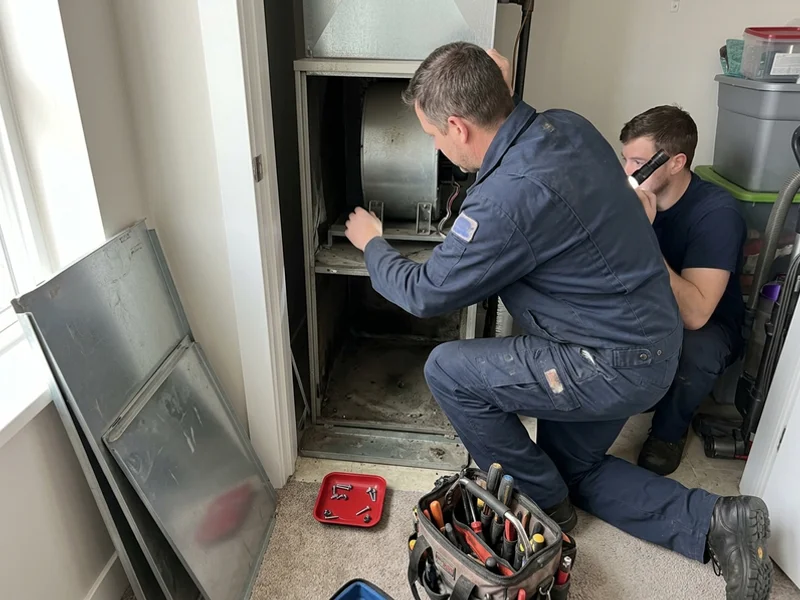
Vertical fan coils are the backbone of Toronto condo stock, and fan coil repair is the most common call we run. Brands like Unilux are found in roughly 90 percent of Ontario condos.
Our crew sees these simple units last 25 years or more when they are properly maintained. A major issue to watch for in aging units is mould and dust buildup, which severely impacts indoor air quality. They depend completely on the building loop for hot or cold water.
Water-Source Heat Pumps
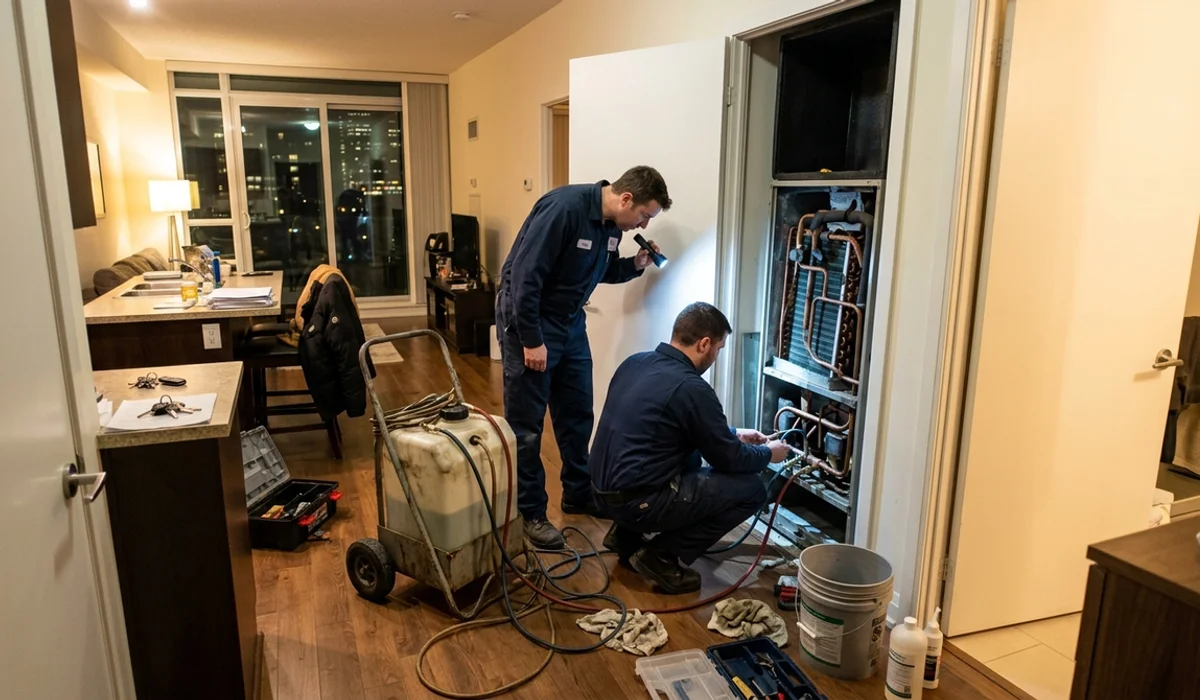
Water-source heat pumps give each suite more independence and can be highly efficient. There is simply more inside the box to wear out, such as the reversing valve and compressor, which is why condo heat pump repair starts with the loop side before anyone condemns a chassis.
We suggest taking a few specific steps to protect your heat pump:
- Change filters frequently: Replace your heat pump filter every three to four months.
- Maintain clear space: Keep furniture at least two to three feet away from the intake vents.
- Monitor performance: Watch for warning signs like strange noises or weak airflow.
Magic-Pak Units
Magic-Pak units are common in low-rise and mid-rise condos across Scarborough, Oakville, and parts of Markham. Many of the gas-fired models installed in the 1990s are now at the end of their functional life.
Our installers note that a standard in-suite replacement in 2026 typically costs between $3,000 and $8,000 CAD. Aging gas systems frequently receive a TSSA Red Tag during inspections.
A Type A Red Tag means the Technical Standards and Safety Authority requires an immediate gas shutoff due to an unacceptable safety hazard. Magic-Pak replacement is often cheaper than chasing compressor and heat exchanger faults on these older models.
Get a Professional Diagnosis
Are you still not completely sure after reading this? Send us a photo of the closet with the panel off when you book your service.
We will tell you exactly what you have before the technician even arrives. Getting the right diagnosis from the start saves you time and frustration.
Book Your Condo HVAC Repair Today
Dealing with temperature issues in a high-rise does not have to be a headache.
We make the entire process clear and straightforward from start to finish.
Professional condo HVAC repair keeps your suite comfortable in every season. Contact our team today to schedule your diagnostic visit.
We are ready to get your system running perfectly again.