Is that metal cabinet in your condo closet making a rattling noise or failing to cool your space? We talk to Toronto homeowners every day who feel overwhelmed by an aging HVAC unit.
This simple guide will walk you through exactly what is inside your system and how to fix it.
We will help you spot the early warning signs before a tiny leak turns into a massive repair bill. You will discover practical steps to extend the life of your equipment and save money on energy bills.
Our team has serviced thousands of these units across the GTA, so you are in expert hands. Grab a coffee, and let’s go through this together.
Vertical Fan Coil Explained: Parts, Pipes and Why They Fail
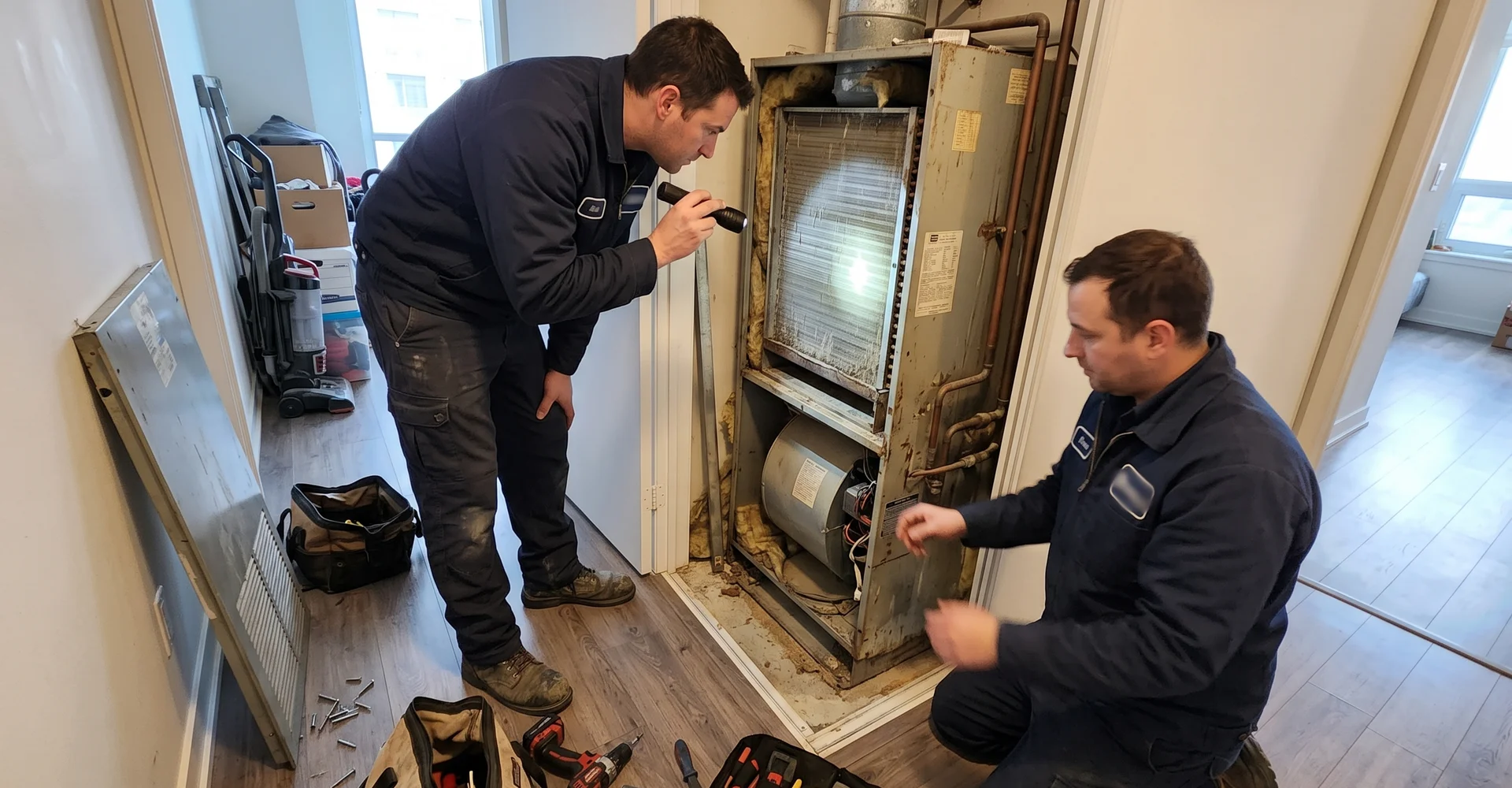
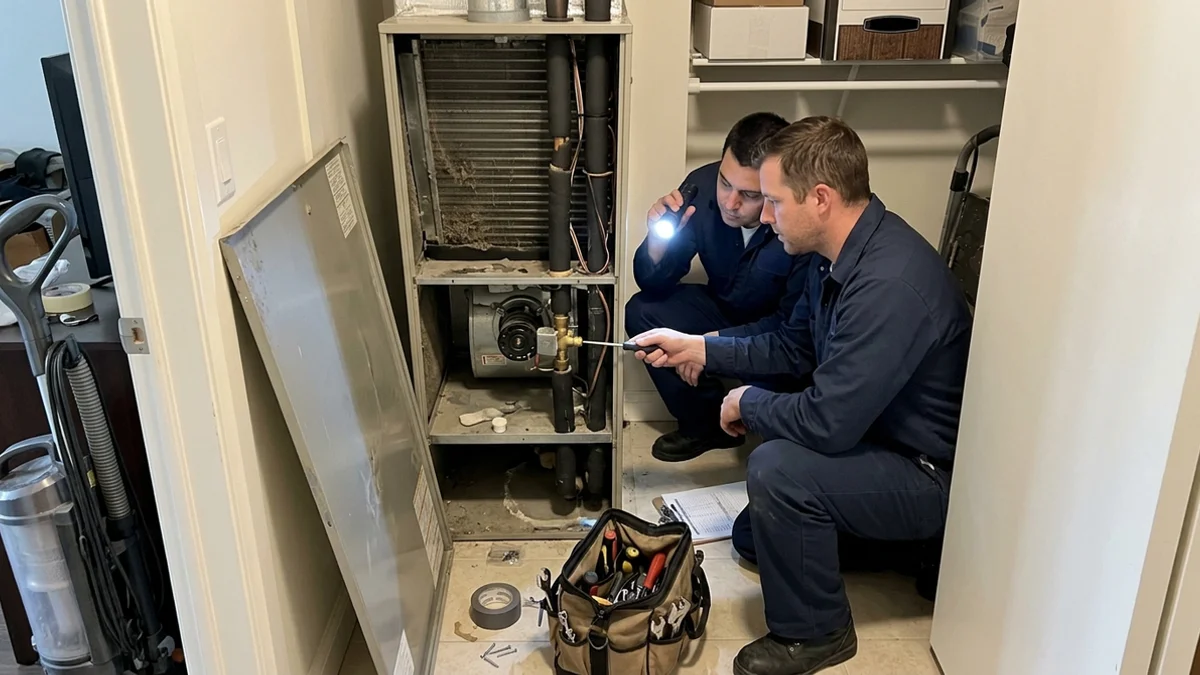
A vertical fan coil is actually a very straightforward piece of equipment. We love these simple machines because they can last decades when properly maintained. The cabinet in your closet contains just a few core components that do all the heavy lifting.
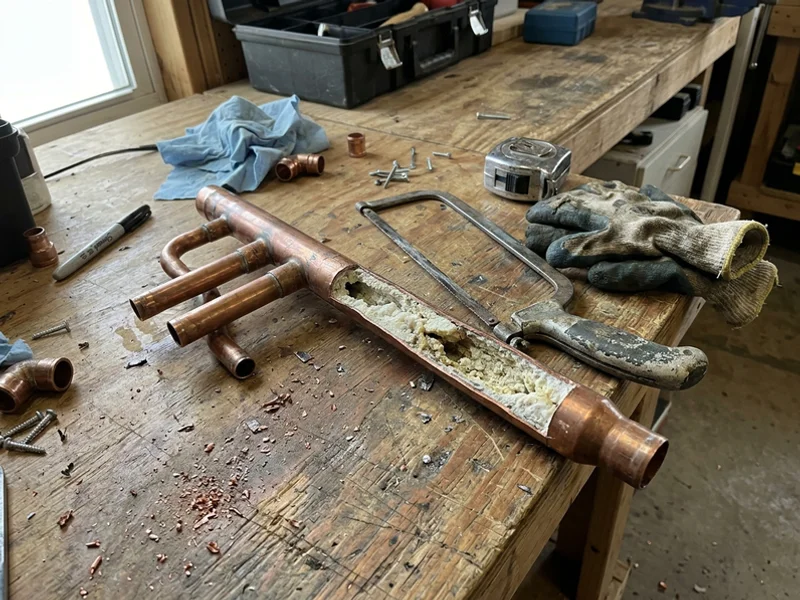
- The coil: A bank of copper tubes and aluminium fins. We often see these getting clogged, but hot or chilled water from the building runs through the tubes to condition your suite air. Copper coil headers at each end connect to the supply and return pipes.
- The zone valve and actuator: A two-way valve that controls water flow. Our preferred replacements are usually a reliable Belimo 24V or an Erie spring-return actuator, which open on demand. They close tightly when the room reaches the right temperature.
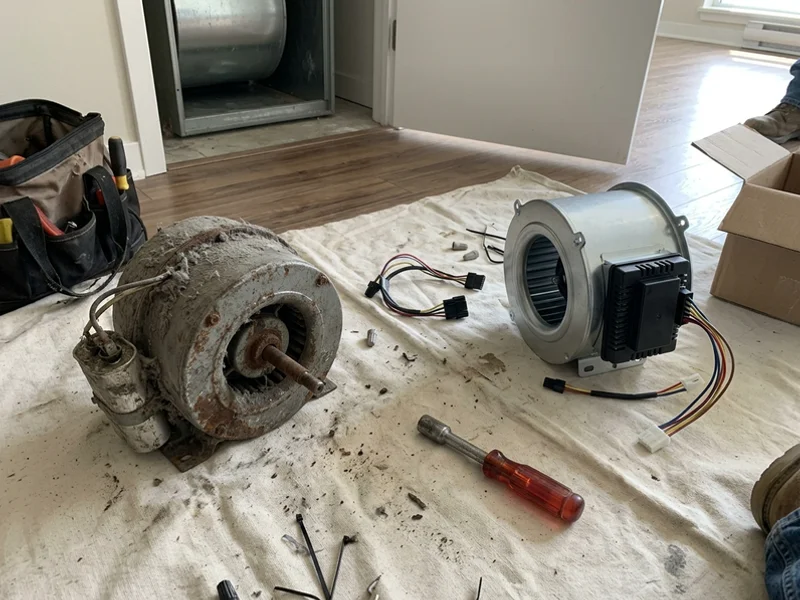
- The blower and motor: A squirrel-cage wheel that pushes air across the coil. We highly recommend upgrading older Permanent Split Capacitor (PSC) motors to modern Electronically Commutated Motors (ECM). ECMs reduce your fan’s electricity usage by 50 to 70 percent.
- The drain pan: Collects condensation in cooling mode before draining it away. Our technicians frequently replace rusted galvanized pans with stainless steel to prevent leaks. A float switch shuts the unit off if the pan overfills.
- Insulation: Lines the cabinet to stop sweating and dampen noise. We often find older fiberglass insulation breaking down and blowing black dust into the condo. Replacing this liner immediately improves your indoor air quality.
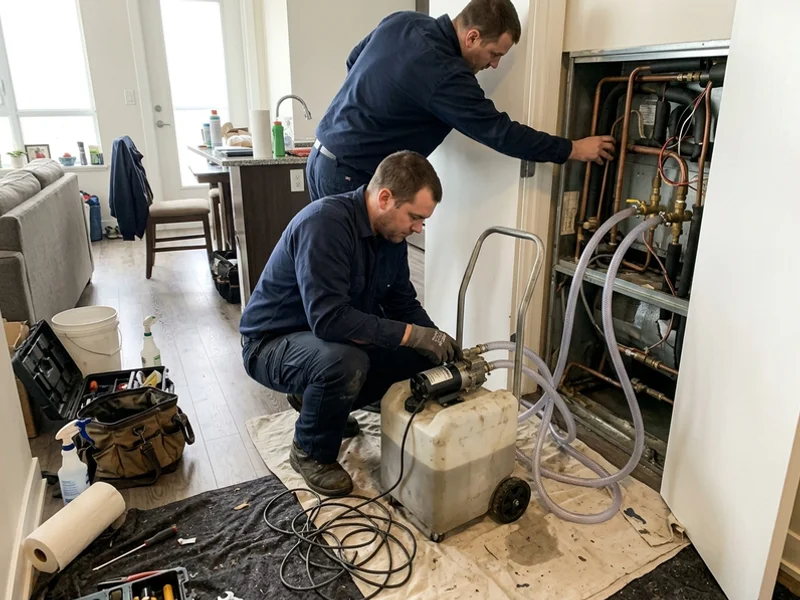
- The riser connections: Isolation valves, a strainer, and sometimes a balancing valve link your unit to the building’s main supply pipes.
Understanding your building’s piping helps clarify your repair options. We typically encounter two main setups in Canadian condos. In a 2-pipe system, there is one supply and one return riser, so the building sends either hot or chilled water depending on the season.
Our technicians often get calls during the tricky shoulder seasons when 2-pipe buildings switch modes. In a 4-pipe system, there are separate hot and chilled water pipes, often with two coils or an electric heater. We appreciate 4-pipe setups because they allow the unit to switch between heating and cooling at any time. An aquastat on some 2-pipe units senses water temperature and tells the controls whether heat or cooling is available.
Why They Fail and What It Costs You
Fan coils fail in a few predictable ways. We track the most common issues that trigger a service call:
- Restricted water flow: Scale builds up inside the coil and strainer over the years.
- Mechanical exhaustion: Motors wear out from running thousands of hours a year, and actuators simply stop stroking.
- Airflow blockages: Deteriorating insulation breaks down and sheds black dust into your living space.
Our biggest concern for homeowners is always the drain pan. Galvanized pans rust out heavily in humid lakefront buildings around Toronto. We highly suggest checking your pan annually because a water leak is no longer just a minor inconvenience.
Condo insurance water damage deductibles in Ontario have skyrocketed in 2026. Our team has seen many building deductibles jump to $25,000 or even $50,000 per claim. A simple rusted drain pan can leave you financially responsible for massive flooding damage to the units below yours.
We always remind clients that none of these specific issues requires the whole unit to be replaced on its own. That focused approach is the whole point of calling a professional. Our thorough diagnostic process pinpoints the exact failing part so you only pay for necessary repairs.
Fan Coil Replacement Cost by Building Vintage
When repair stops making sense, replacement cost depends entirely on when your building went up. We track pricing data across Toronto and the GTA to give you accurate estimates. These are typical ranges for a fully installed replacement unit. We always factor the specific details of your condo’s layout into our quotes.
| Building vintage | Typical original units | Common issues | Replacement per unit |
|---|
| 1980s | 2-pipe verticals, older McQuay and regional brands | Heavy scale, seized valves, rusted pans, obsolete parts | $3,800-$6,500 |
| 1990s | McQuay and First Co verticals | Pans, motors, insulation, scale | $3,200-$5,800 |
| 2000s | Unilux, Climetec, First Co | Liners shedding, actuators, early pan corrosion | $2,800-$5,200 |
| 2010s+ | Newer verticals and horizontals | Mostly repairs; replacement rare | $2,800-$4,800 |
Older buildings cost more for two very specific reasons. Our installers find that early closet openings were built around units that are no longer manufactured. A replacement for a 1980s McQuay or a 2000s Unilux unit often requires custom adapters, retrofit sleeves, or special sizing.
We also deal with older riser isolation valves that do not hold water pressure properly. This faulty valve issue means coordinating a short stack shutdown with the building superintendent. Our team handles all of this coordination to make the installation day as smooth as possible for you.
Thankfully, building-wide replacement programs bring the per-unit cost down significantly. We apply volume pricing when upgrading more than 20 units at a time. Building managers schedule stacks floor by floor over two to 14 weeks.
Our condo HVAC replacement page explains how boards plan and fund these upgrades, including reserve fund studies and suite entry notices. Checking into 2026 Ontario HVAC rebates, like Enbridge incentives, can also help your board offset these major upgrade costs.
Book Your Fan Coil Repair Today
Dealing with a broken HVAC system is frustrating, but getting it fixed is easy. We are ready to inspect your unit and give you a clear, honest assessment. Reach out to book a service appointment and restore comfort to your condo.
Our technicians keep your suite perfectly heated and cooled all year long. Call us today to schedule your diagnostic visit.