Have you ever opened your condo utility closet and wondered what that humming metal box actually does? We hear this question all the time from Toronto homeowners. Most people imagine a traditional air conditioner sitting in a backyard.
Your high-rise system operates completely differently.
It hides inside a compact unit that trades heat with water, and understanding this mechanism saves you money on future service calls. This quick guide to Condo Heat Pump Repair shows you exactly how your system works. Grab a cup of coffee, and let’s go through it together.
Condo Heat Pumps Explained
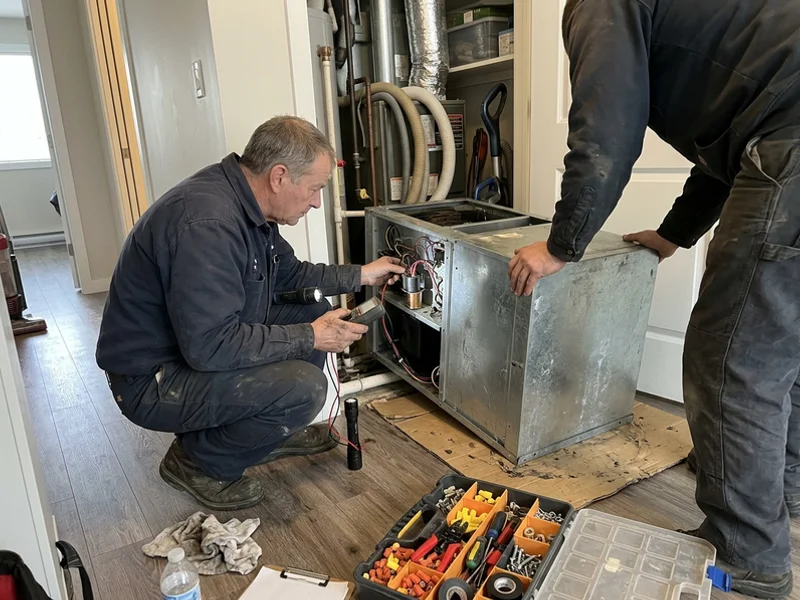
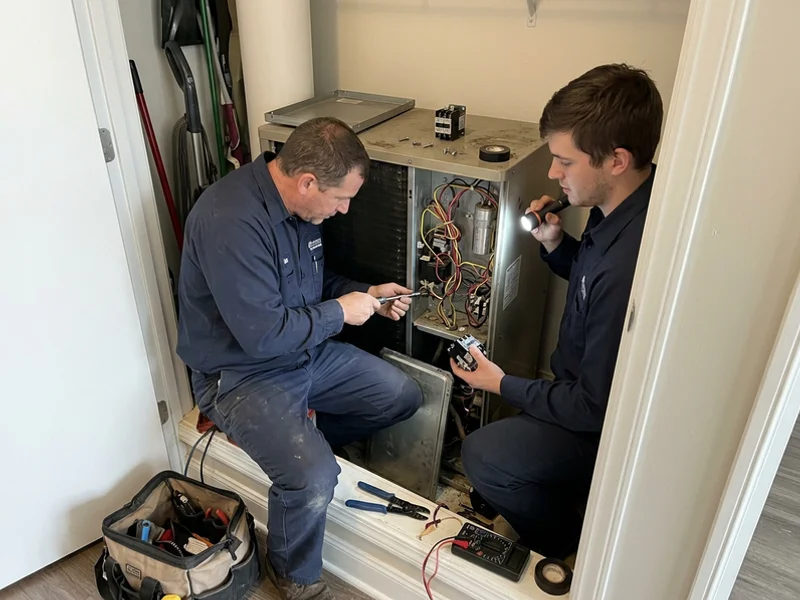
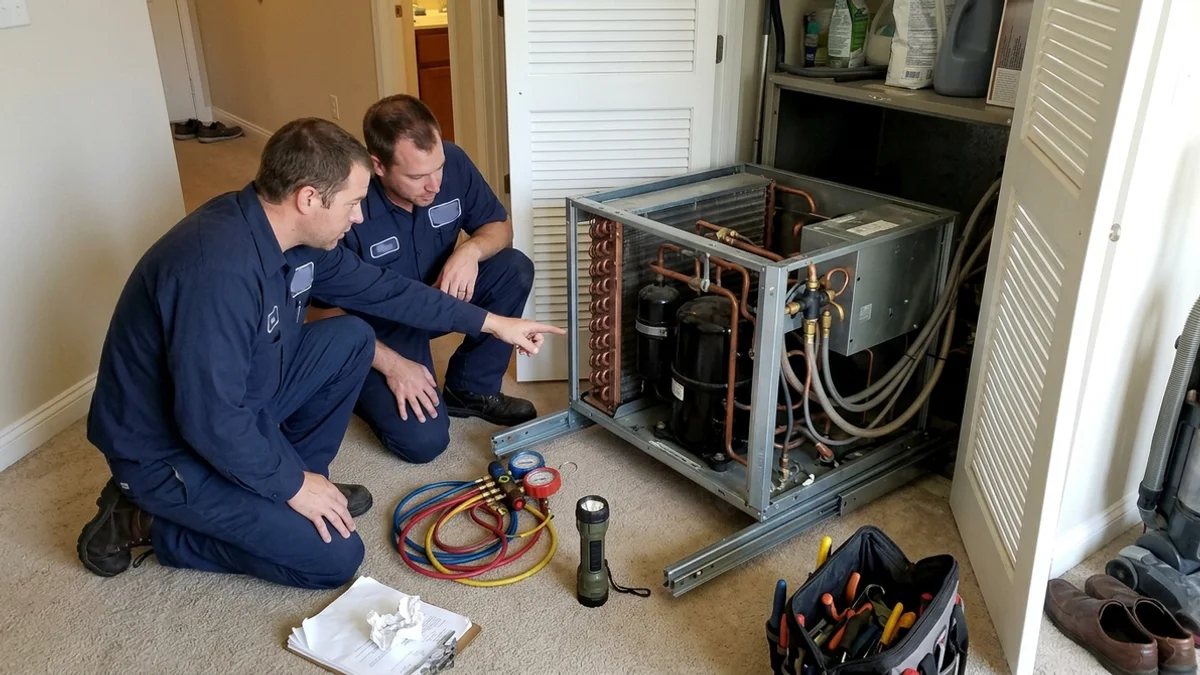
Every suite heat pump relies on a specific set of moving parts to keep you comfortable. We frequently replace components like the compressor, which is usually a rotary style in smaller units or a scroll version in larger ones. A reversing valve acts as the traffic cop to switch your system between heating and cooling modes.
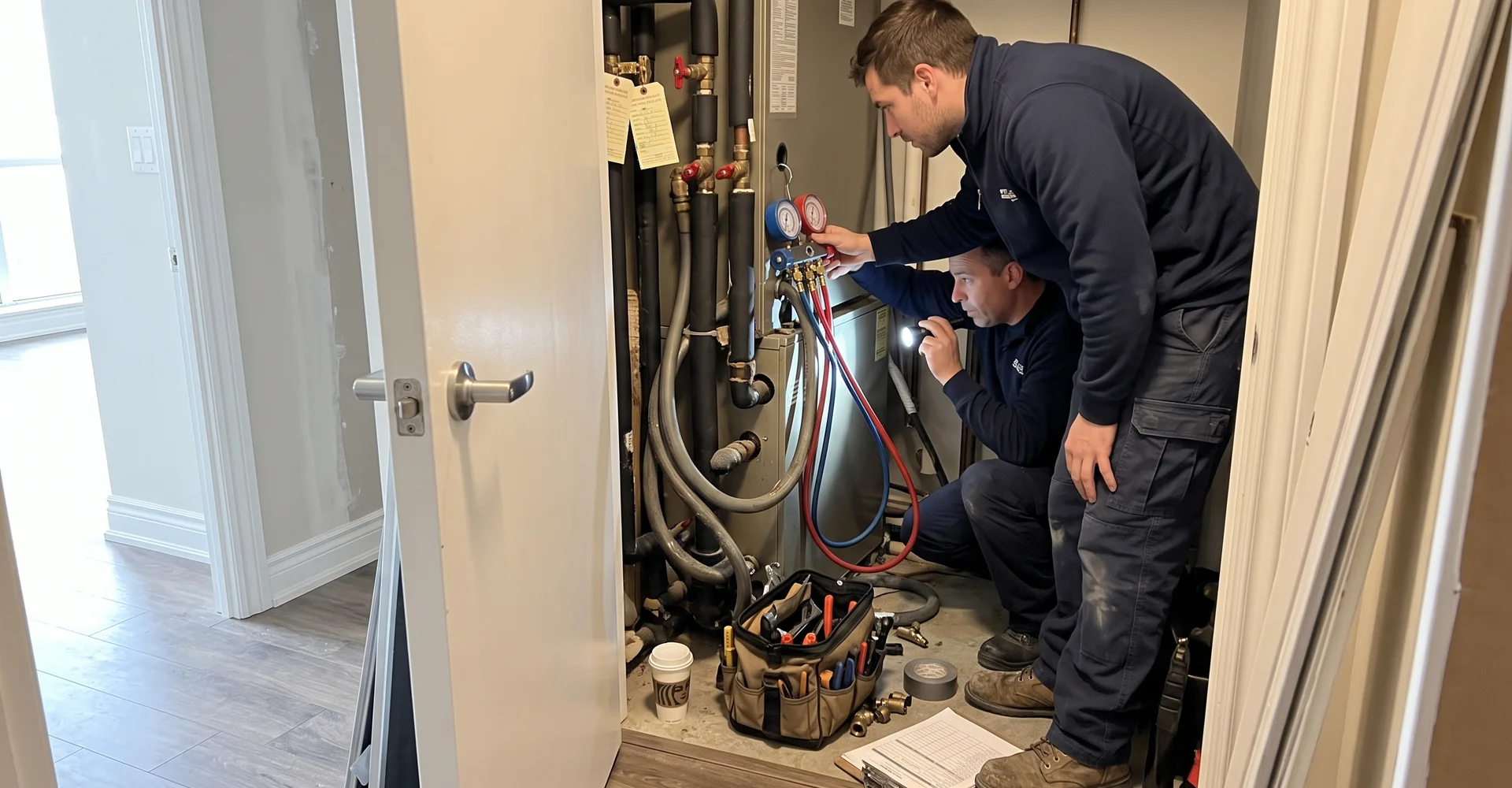
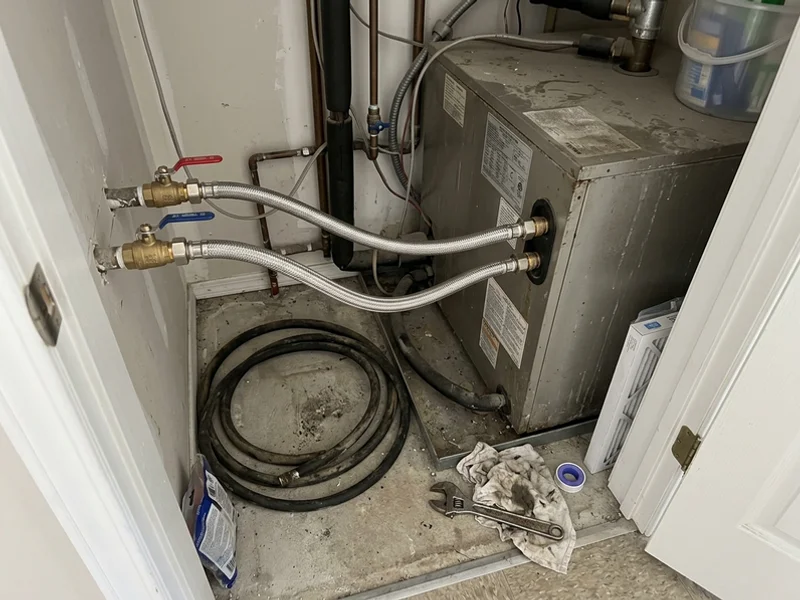
The actual temperature change happens at the air coil, which directly heats or cools your suite air. We always check the coaxial water-to-refrigerant heat exchanger during a visit. This crucial part connects to the main building loop through rubber hoses and a metal strainer.
A high-low pressure switch and a freeze protection thermistor stand by as safety guards. They will immediately shut the system down if something goes wrong.
The Most Common Brands in Canada
Many property owners do not realize that their building dictates the exact equipment they can use. We see brands like Omega, Whalen, and ClimateMaster dominating Canadian condos in 2026. These specific units require exact pin-for-pin control board replacements to match your building’s electrical setup.
A simple mismatch will trigger constant system lockouts.
Understanding Repair Costs
Basic knowledge of your components helps you budget for unexpected breakdowns. We find that exact repair prices in 2026 depend heavily on the failed part:
- Minor Electrical Fixes: $180 to $1,200 for control boards or thermostats.
- Mechanical & Refrigerant: $1,000 to $3,500 for valves or leak patching.
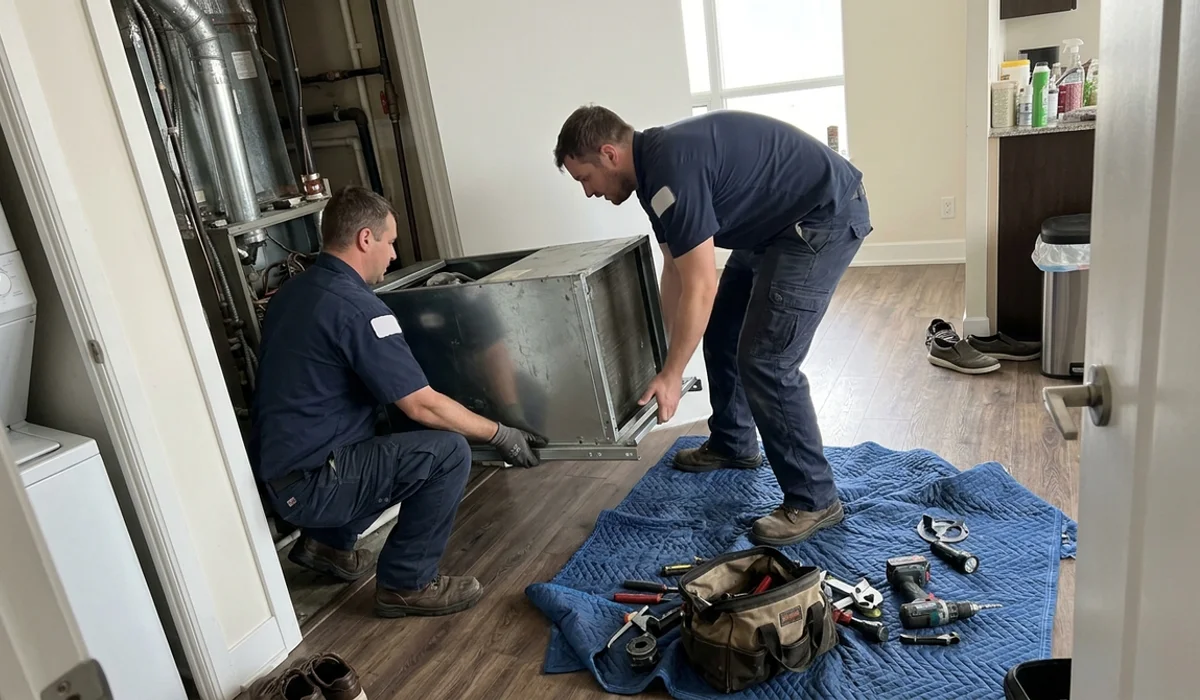
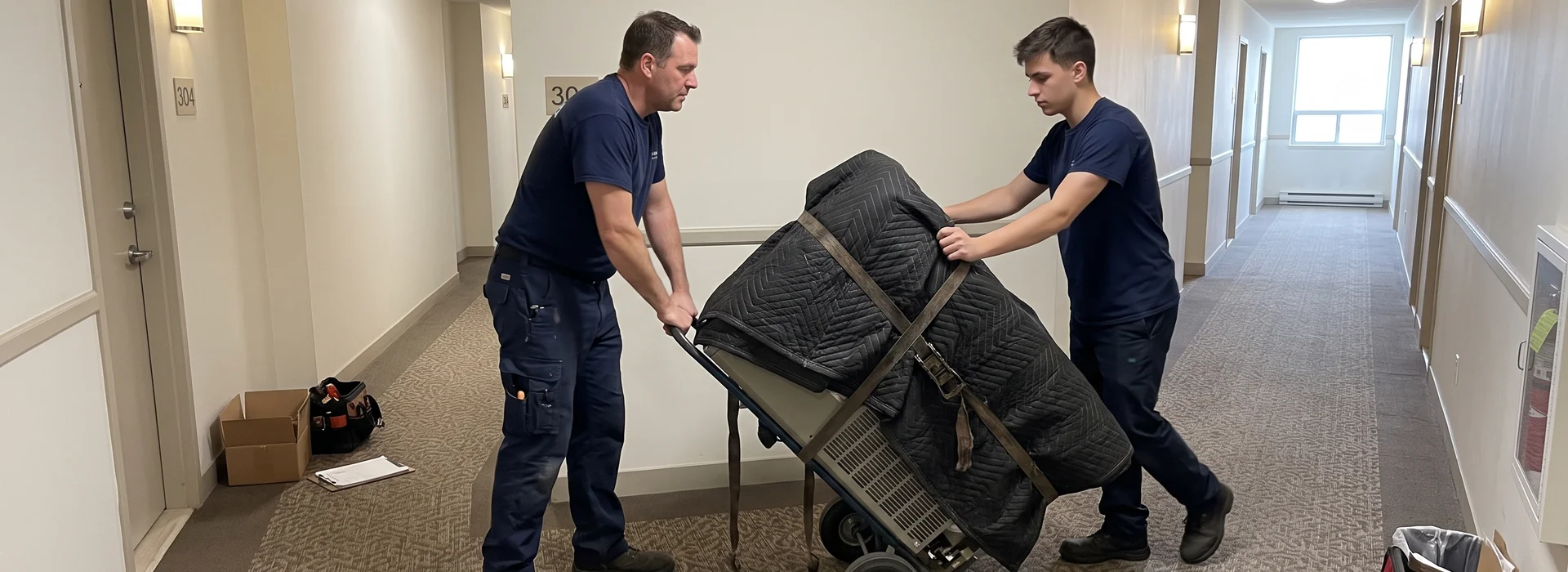
- Full System Replacement: $3,500 to $7,500 for a completely new chassis.
Because each suite has its own compressor, a heat pump condo allows one owner to cool while a neighbour heats. This flexibility means you have more parts inside the box that can fail. Regular service matters much more here than it does with a plain fan coil unit.
Heat Pumps for Condos: What Owners Should Know
If you own a suite, a few things are worth knowing before something breaks. We highly recommend reviewing these basic facts to avoid surprise repair bills.
- Your unit has a long service life. Many condo systems run efficiently for 15 to 25 years. We replace compressors and coaxial coils as the most expensive repairs. Contactors, capacitors, and reversing valve solenoids are much cheaper components that fail more often.
- Hoses matter immensely. Rubber supply and return hoses harden and crack as they age. We suggest asking your property manager if the building runs a mandatory hose replacement program. Upgrading yours to braided stainless steel is cheap insurance against catastrophic water leaks.
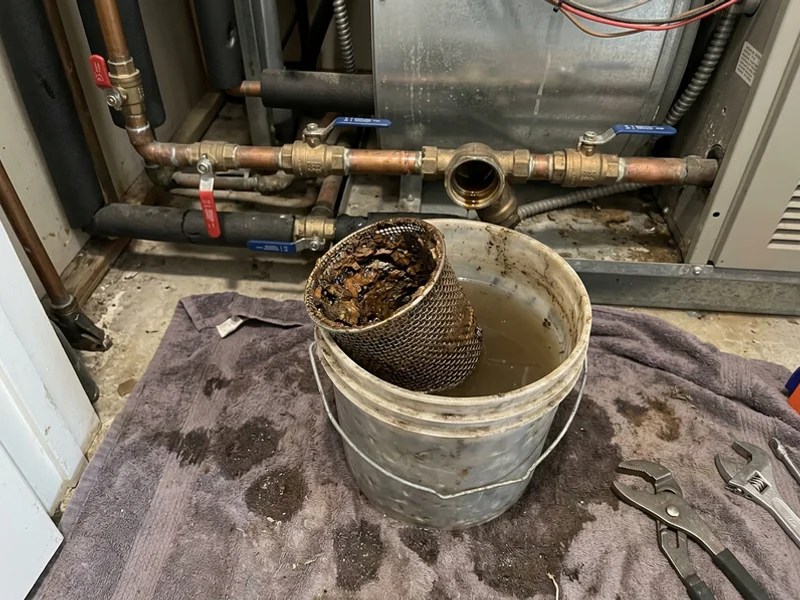
- Filters and strainers fall under maintenance. A clogged air filter or a dirty loop strainer remains the most common cause of high-pressure lockouts. We catch both of these sneaky issues during a standard annual service visit.
- Know what the corporation actually owns. The central water loop, the building pumps, and usually the riser valves belong to the common elements. Your specific interior unit is often your own responsibility. Check your condominium declaration and standard unit by-law to be certain.
- Smart thermostats require caution. Upgrading to a Nest or Ecobee is a great idea, but they require a common wire (C-wire) to function correctly with a water-source system. We see DIY installations fry internal control boards simply because the homeowner configured the thermostat for a conventional furnace.
- Financial rebates changed in 2026. The old Canada Greener Homes Loan officially closed in late 2025. We now guide eligible Ontario homeowners to the Home Renovation Savings (HRS) program, which offers rebates up to $5,000 for gas-heated homes or $10,000 for electrically heated homes making energy upgrades.
Apartment Heat Pump Systems in Toronto Buildings
Toronto’s condominium and apartment stock uses three main equipment layouts. Knowing which one your building has helps you understand exactly what a repair involves.
We always ask property managers which specific framework their building utilizes before dispatching a technician. This information completely changes how we approach a service call.
| Layout | Where you see it | How it works | Typical repair focus | Estimated Replacement Cost (2026) |
|---|
| Water-source heat pump per suite | Yonge corridor, Square One, Markham mid-rises | Each suite unit trades heat with a shared water loop kept moderate by a boiler and cooling tower | Valves, contactors, hoses, strainers, coaxial coils | $3,500 to $7,500 |
| VRF system | Newer towers in VMC, Yonge-Eglinton, City Centre | Refrigerant piped from rooftop or mechanical floor condensers to indoor units in each suite | Indoor units, controls, condensate, refrigerant leaks | $5,000 to $9,000 |
| Through-the-wall packaged heat pump | Some low-rises and older rentals | Self-contained unit through an exterior wall, similar to a Magic-Pak | Compressor, coils, louvers, end of life replacement | $6,000 to $10,000 |
Water-source systems are by far the most common in the properties we service. They operate with incredible efficiency because the loop continuously moves heat around the building. Suites that require cooling in the spring dump their excess heat into the loop for other suites to use for heating.
We love this clever design because the main building plant only has to top up or reject the remaining temperature difference. This shared load drastically reduces total energy consumption.
Water-Source Heat Pump Explained
Here is exactly what happens inside your system on a sweltering summer day. The compressor squeezes the internal refrigerant into a hot, high-pressure gas.
A component called the reversing valve sends that gas straight to the coaxial heat exchanger, where the loop water carries the excess heat away. The refrigerant then condenses, passes through a metering device, and arrives at the air coil perfectly cold.
Suite air blows across this chilly coil and comes out cool and refreshing. In the winter, the reversing valve flips the direction, and the air coil becomes the hot side.
Temperature and Flow Rate Issues
The central building loop is usually kept somewhere around 18 to 32 degrees Celsius depending on the season. Extreme temperature shifts cause immediate system reactions:
- Summer Heat Spikes: Units quickly trip on high-pressure safety switches.
- Winter Freezes: The freeze protection thermistor safely shuts the system down.
We also pay close attention to the water flow rate, which should typically sit between 2 and 3 gallons per minute per ton of cooling capacity. Low flow from a clogged strainer or a heavily scaled coaxial coil produces the exact same symptoms as bad water temperature.
Proper Diagnosis Prevents Overspending
That is why a proper technician always checks the main loop and the strainer before tearing into the sealed refrigerant circuit. We frequently see a stuck Thermostatic Expansion Valve (TXV) misdiagnosed as a completely dead compressor. A TXV replacement costs roughly $800, while a full compressor swap can easily exceed $2,500.
If you are dealing with a building-wide loop problem rather than a single suite, our hydronic riser service covers loop flushing, pumps, and balancing. For full chassis swaps and structured building programs, you can read more about our condo HVAC replacement options.
Expert Help for Your Heating and Cooling Needs
Dealing with a condo HVAC breakdown is stressful when you do not know who to call. We take the guesswork out of the process with clear pricing and honest diagnostics.
A quick repair today prevents a massive headache tomorrow. Start by booking a simple inspection to protect your investment.
Reach out to our team today to schedule your condo heat pump repair, and let us get your system running efficiently again.