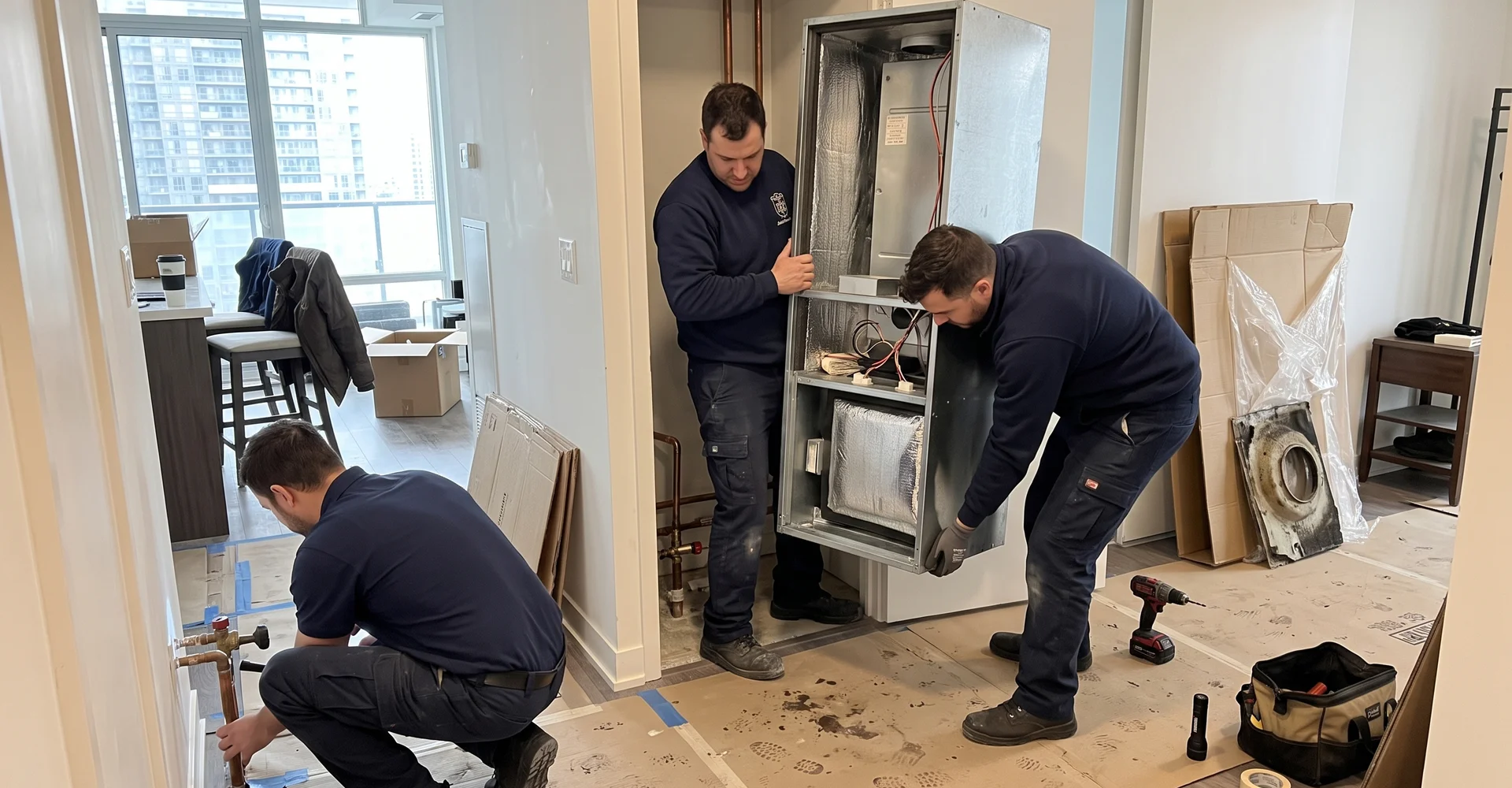
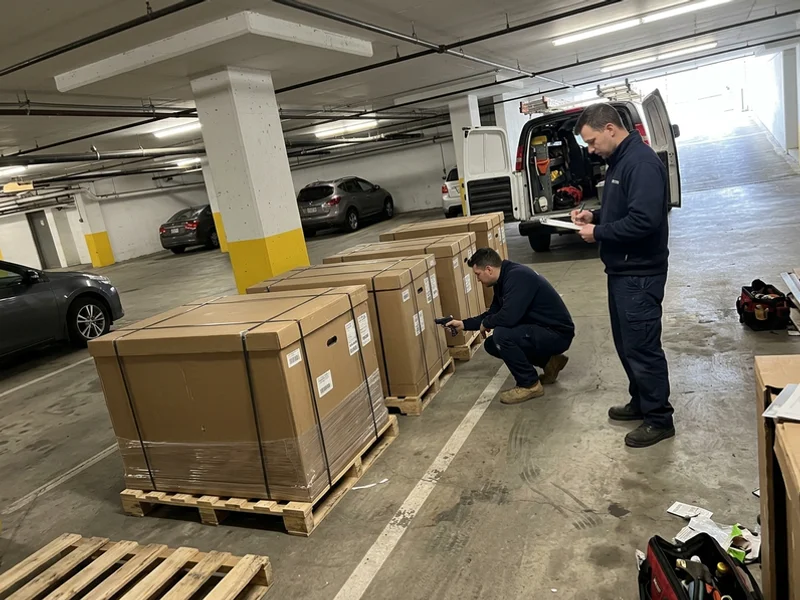
Are you wondering if it is time for a full condo HVAC replacement in your Toronto building?
Our professional service team knows this process can feel like a big project at first glance. The good news is that planning ahead saves a lot of stress.
We are going to walk you through the exact steps, costs, and timelines so you can make an informed decision. Grab a cup of coffee, and let’s go through it together.
Condo HVAC Replacement Cost in Toronto
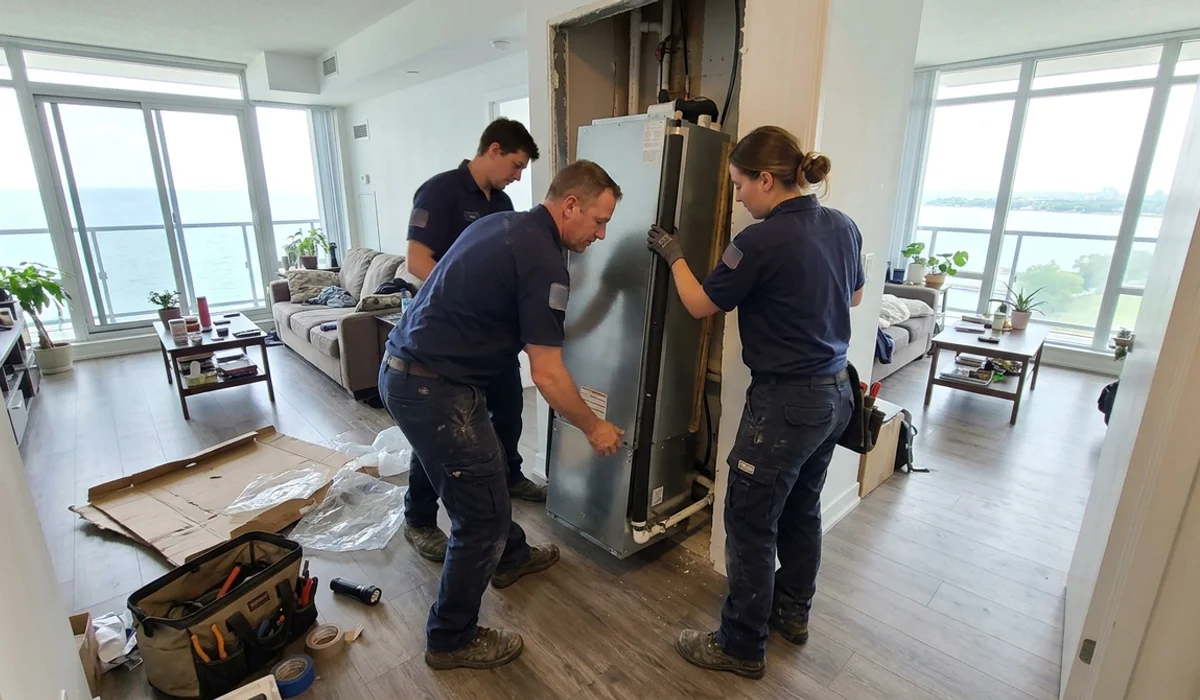
Replacement cost depends on four main factors, including the type of equipment, the building’s age, unit count, and chosen upgrades. We typically find that 2026 pricing for standard in-suite replacements ranges from $3,000 to $8,000 across the GTA. Upgrading to an electronically commutated motor (ECM) will sit on the higher end of that scale, but it drastically improves energy efficiency. Our local climate demands reliable performance, which is why matching the right brand to your building matters. Canadian-built brands like Omega, manufactured right in Mississauga, are often a perfect drop-in replacement for older Whalen systems.
| Scope | Typical range | What drives the number |
|---|
| Single vertical fan coil | $2,800-$6,500 | Size, closet access, retrofit sleeve, ECM upgrade |
| Single heat pump chassis | $4,500-$8,500 | Tonnage, cabinet fit, efficiency level |
| Magic-Pak PTAC | $4,800-$7,500 | Series, louver fit, gas connection |
| Building-wide program | $85K-$2.4M | Unit count, equipment mix, schedule, volume pricing |
Volume pricing usually starts when you bundle more than 20 units. We find that larger programs see the biggest per-unit savings because equipment is ordered in bulk and crews stay on one site. Building-wide programs are typically billed by floor, with a holdback released after commissioning. This phased billing approach keeps the project moving smoothly.
Repair vs Replace: A Framework for Owners and Boards
Owners and boards face the exact same question from different angles when units break down. We use a simple framework to help clients decide, putting the numbers directly in writing. The Ontario Condominium Act requires a reserve fund study every three years, which makes planning these updates much easier.
Checking the Age and Condition
Age is the first metric you should evaluate. Our general rule is that under 15 years, repair almost always wins. Between 15 and 20 years, it depends entirely on the condition of the specific parts.
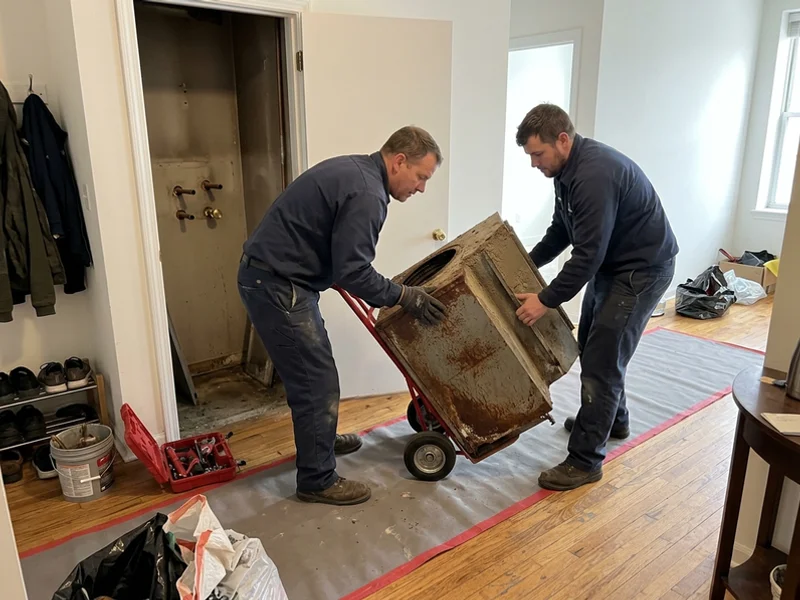
Past the 20-year mark, a full replacement usually wins unless the unit is in unusually pristine shape. We always look closely at the condition of the physical box. A sound coil and a clean cabinet are worth keeping, while a scaled coil, a rusted pan, or a corroded base are major warning signs.
Monitoring Repair Frequency and Size
One minor repair in three years falls under normal wear and tear. Our technicians tell clients that three repairs in two years establishes a clear, costly pattern. The size of the repair bill is another critical factor.
If this year’s fix costs more than a third of a brand-new installation, you should seriously look at replacing the whole unit. We also suggest checking the master building plan. If the board plans a building-wide program in the next two or three years, an owner might want to repair now and join the program later at volume pricing.
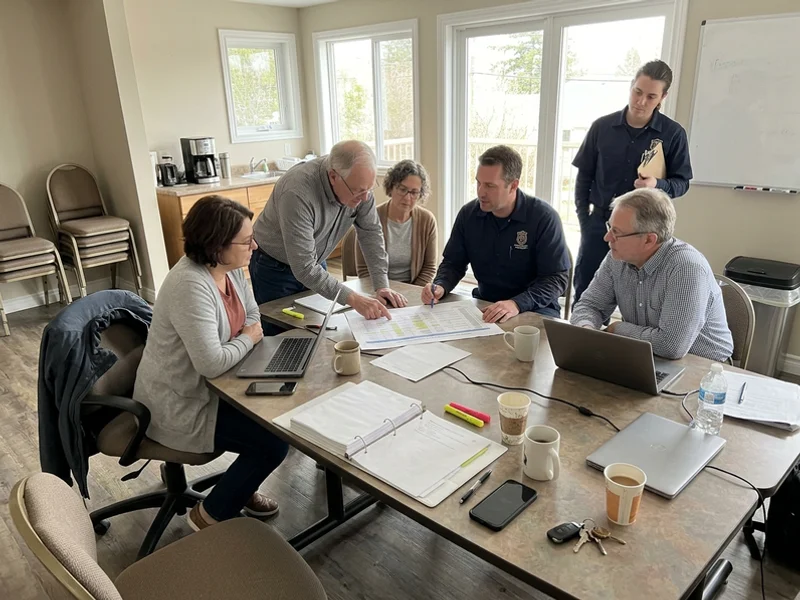
For boards, these same factors apply across the entire property. Our sample surveys show whether the building is uniformly at the end of its life, or whether some specific stacks can wait. Phasing the work spreads the cost across reserve fund years. This strategy lets the corporation learn from the first phase before committing to the rest.
Condo HVAC After a Flood or Water Damage
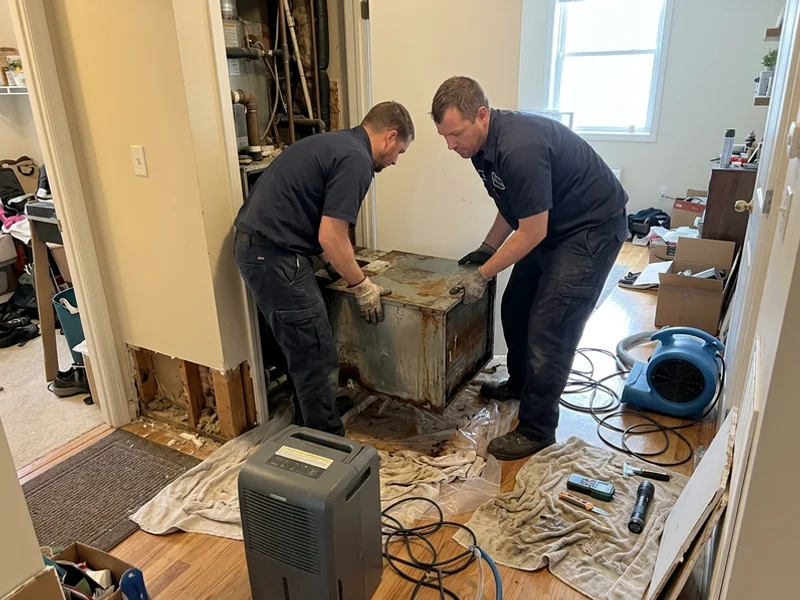
Water damage changes the repair math instantly. Our emergency crews see how a fan coil or heat pump that has been submerged might still run today, but motors, controls, and insulation will likely fail weeks later. Health Canada warns that mould can begin growing on wet insulation and drywall within just 24 to 48 hours. Wet materials pose a severe health risk, which is why insurers almost always require a complete replacement.
We prioritize three main steps after a flood. First, you must document the scene before anything is removed.
- Take clear photos: Capture the damage, the model numbers, and the serial numbers immediately.
- Sequence the work correctly: Drying and restoration happen first, followed by the HVAC replacement, and finally the finishing touches. That way new equipment is not exposed to trapped moisture.
- Coordinate across suites: Water travels down the stack, so several units are usually affected simultaneously. Replacing them together saves time for residents and the insurance adjuster.
Our team handles the documentation, defines the scope of work, and executes the replacement. Managing the timing with the property manager and the restoration company is a top priority. We also make sure to recommend fixes that stop the issue from happening again. If the root cause was a failed hose or pan, upgrading to braided stainless heat pump hoses or scheduling a full fan coil pan replacement on the remaining units is the smartest move.
Making the right choice for your condo HVAC replacement does not have to be a guessing game. Our team is always ready to review your building specs and recommend the best fit. Reach out today to schedule a quick inspection, and get a clear, detailed quote for your property.