24-Hour Condo Emergency Dispatch
(647) 294-5454
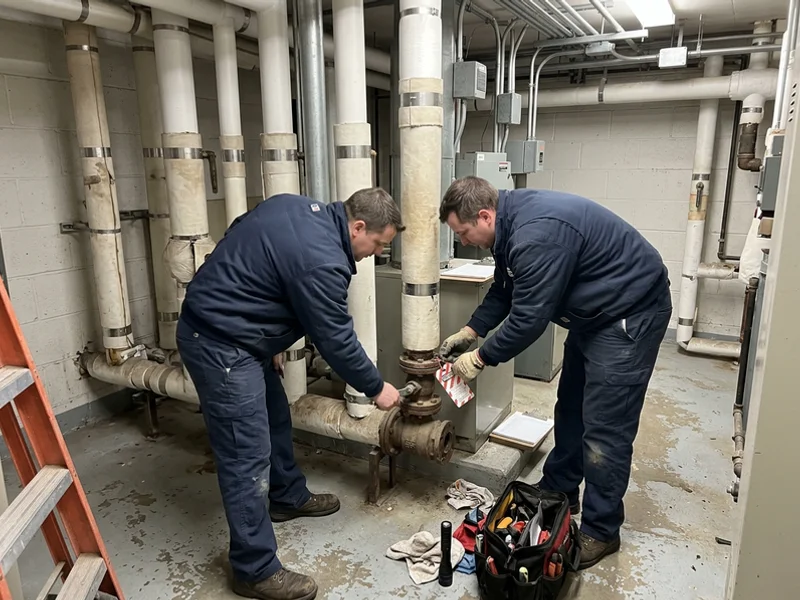
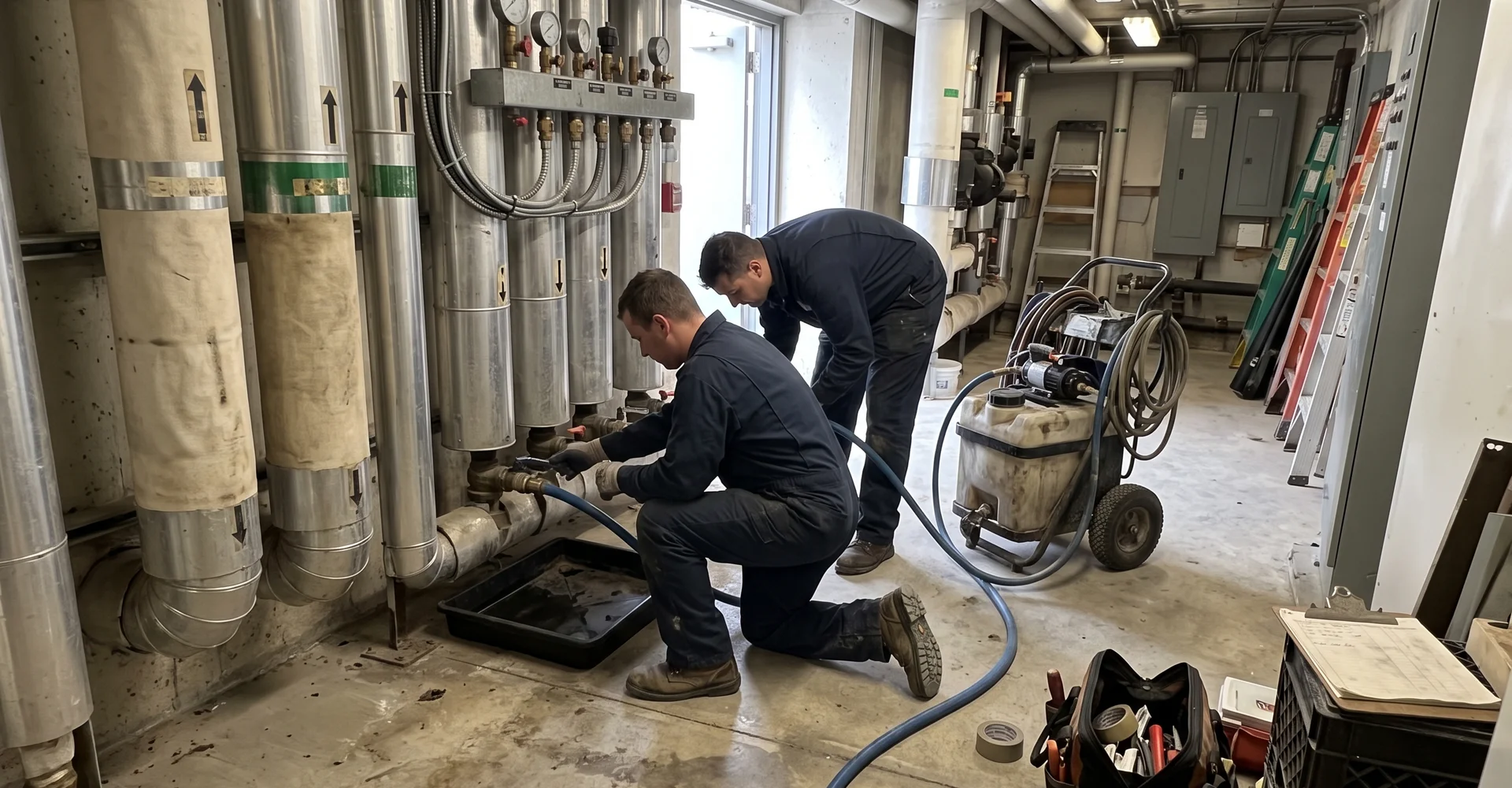
Technicians connecting a flush cart to riser drain valves in a condo mechanical room
Building Loop & Riser Programs

Vertical Hydronic Riser Service in Toronto, ON | Water Loop Flush & Pump Replacement | Building Programs

Condo HVAC Repair Toronto flushes, balances and repairs vertical hydronic risers and building water loops, and services the fan coils, water-source heat pumps and Magic-Pak PTACs they feed, across Toronto, Mississauga, Vaughan and the GTA. TSSA-certified technicians, Enbridge Red Tag authorized, ESA licensed on HVAC panels, $5M liability. Scope in writing first. Riser work is a building decision, so we plan it with property managers, superintendents, condo boards and reserve fund committees.

Riser problems get treated as suite problems. A stack of cold suites gets a round of new zone valves and thermostats, and nothing changes because the riser itself is restricted. Other shortcuts: flushing without measuring flow first, replacing a primary pump without checking the expansion tank and air vents, and closing balancing valves to quiet a noisy suite until the top floors go cold. We take flow and temperature readings before and after every job and follow ASHRAE 180 practice.

Loop flushes run $3,500 to $12,000 per building, and primary pump replacement $2,400 to $8,500. A flush usually takes 1 to 3 working days with riser shutdowns of a few hours per stack. Larger programs are scheduled across several weeks. We serve Toronto, North York, Scarborough, Etobicoke, Mississauga, Vaughan, Markham and Oakville with a written workmanship warranty, WSIB, $5M CGL and TSSA certification.

  • Building Loop Specialists
  • Shutdown Notices Drafted
  • Before & After Flow Readings
  • $5M CGL + WSIB
  • Reserve Fund Reports

Book a Riser Service Diagnostic

Site survey diagnostic, flush $3,500 to $12,000 per building. Written scope before any part is replaced.

TSSA G1 gas and ESA electrical oversight. No hidden fees.

  • Free Walk-Throughs
  • Written Scope First
  • PM-Friendly Billing
  • TSSA + ESA + WSIB
  • Workmanship Warranty

Types of Riser and Loop Service We Handle

Riser work keeps every suite on the stack supplied. These five services cover the building side of condo HVAC.

Chemical Riser Descaling & Flush

Over decades, minerals and corrosion products build up inside risers, branch piping and coils. Flow drops, top floors run cold or warm, and suite equipment works harder for less. A chemical flush isolates the risers, connects a flush cart at the drain and fill points, circulates an inhibited descaling chemical, then neutralizes, flushes and refills with treated water. We record flow and temperature at sample suites before and after so the board can see the result in numbers. Flushes are priced per building at $3,500 to $12,000 depending on riser count and height.

Primary Pump Replacement

The primary pumps move water from the plant through every riser in the building. When one fails, whole sections of the tower lose heating or cooling. We assess pump curves, motor condition, bearings, seals and couplings, and replace pumps with properly sized units from makers like Taco when repair no longer makes sense. Replacement runs $2,400 to $8,500 depending on size and configuration. Work is planned around the building's standby pump where there is one, so service continues during the swap.

Balancing Valve & Circuit Setter Calibration

Balancing valves and circuit setters split flow between risers so each stack gets its share. Over time, valves get adjusted to fix one complaint and break another, or they seize in place. We measure differential pressure across each circuit setter, compare it with design flow, and rebalance the risers so top and bottom floors get what they need. Rebalancing often fixes cold-stack complaints without a flush, and when it does not, the readings show exactly where the restriction is.

Air Vent & Expansion Tank Service

Air trapped in a hydronic loop causes gurgling, noisy suites and units that will not heat or cool even with the valve open. Automatic air vents at the top of risers stick or leak after years of service. Expansion tanks lose their air charge and let system pressure swing. We service or replace air vents, check and recharge or replace expansion tanks, and verify fill pressure so the loop holds steady. This is often the quiet fix for buildings with repeat noise complaints on upper floors.

Riser Isolation Valve Replacement

Isolation valves at the base of each riser and at each suite let one stack or one unit be shut off without draining the building. Older gate valves often fail to close fully, which turns every suite repair into a riser drain down. We replace failed valves with full-port hydronic isolation ball valves, usually during a planned shutdown, so future repairs can be done suite by suite. Boards often bundle this with a flush to share one shutdown window.

Technician closing a riser isolation ball valve

Every riser service visit includes

  • Loop flush $3,500-$12,000 per building
  • Primary pump $2,400-$8,500
  • Shutdown notice drafting
  • Before/after flow and temperature readings
  • Written report for reserve fund study

Common Riser and Loop Problems We Fix

Three building-side problems account for most riser calls. Each has a test that separates it from a suite problem.

Mineral Scale Restricting Flow

Symptom:
Suites on one or more stacks struggle to reach temperature, the upper floors are worse, and individual repairs to zone valves and motors have not helped. Fan coil and heat pump strainers clog quickly after cleaning. The building is 20 or more years old and has never been flushed.
Action:
We measure supply and return temperatures and pressure drop at sample suites on each stack, plus differential pressure at the circuit setters. A pattern of low flow across a whole riser points to scale rather than individual units.
Scope:
Chemical riser descaling and flush, $3,500 to $12,000 per building depending on riser count and floors. Before and after readings are included in the written report for the reserve fund file.
Response:
Free walk-through and readings within 2 weeks. Flushes are scheduled 3 to 6 weeks out so notices can go to residents.
Scope: Loop Flush $3,500-$12,000
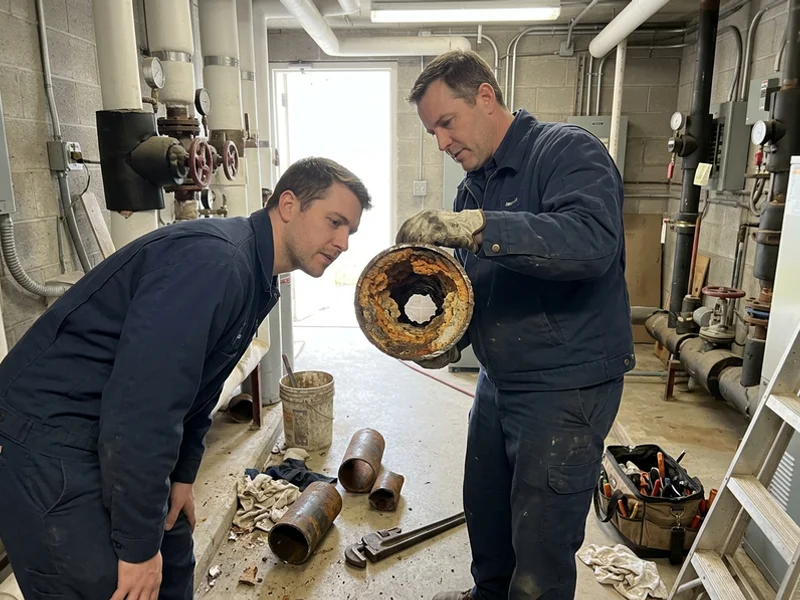
Section of riser pipe showing heavy mineral scale

Primary Pump Failure

Symptom:
A whole section of the building loses heat or cooling at once. The superintendent reports a noisy, hot or tripped pump motor, a leaking seal or a pump that runs but does not build pressure. Calls come from many suites within the same hour.
Action:
We check the pump, motor, coupling, seals and electrical, confirm the standby pump is running if there is one, and measure system pressure. If the standby is carrying the load, the failed pump is assessed for repair versus replacement.
Scope:
Seal and bearing repairs are quoted where viable. Primary pump replacement runs $2,400 to $8,500 depending on size and setup, with the pump matched to the system curve.
Response:
Emergency response 24 hours for building-wide outages. Planned replacement within 1 to 3 weeks depending on pump lead time.
Response: 24-Hour Building Outages
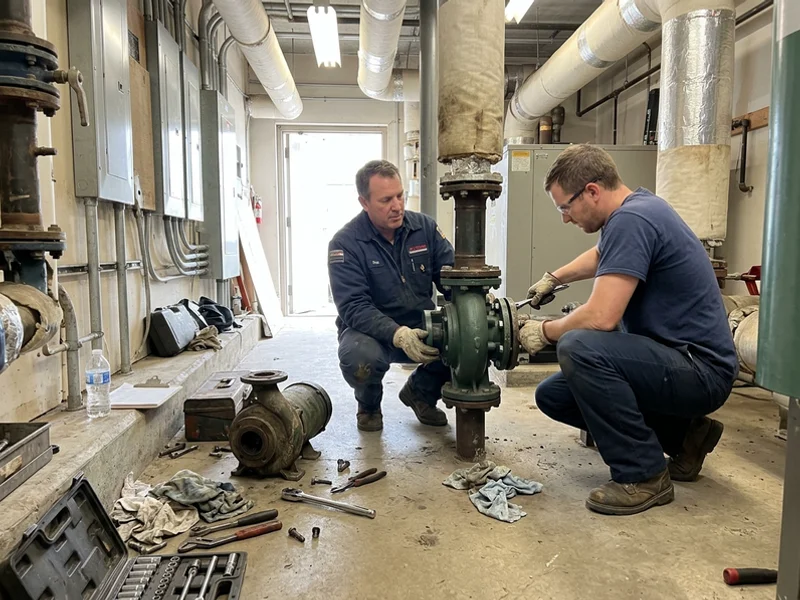
Technicians replacing a primary circulating pump

Multi-Unit Cold Spots

Symptom:
A few suites scattered on different floors are cold while their neighbours are fine, or one riser runs cold while the others are normal. The problem moves around when someone adjusts a valve in the mechanical room.
Action:
We map the complaints to risers, then check air vents, balancing valves, isolation valves and expansion tank pressure. Air in the loop and poorly set circuit setters are the usual causes before scale.
Scope:
Air vent service, expansion tank recharge and rebalancing often solve it for $1,200 to $3,500. If readings show scale, a flush is recommended in writing with the data to back it.
Response:
Booked within 1 to 2 weeks. Evening visits available so we can check the loop during peak demand.
Scope: Balancing & Air Removal
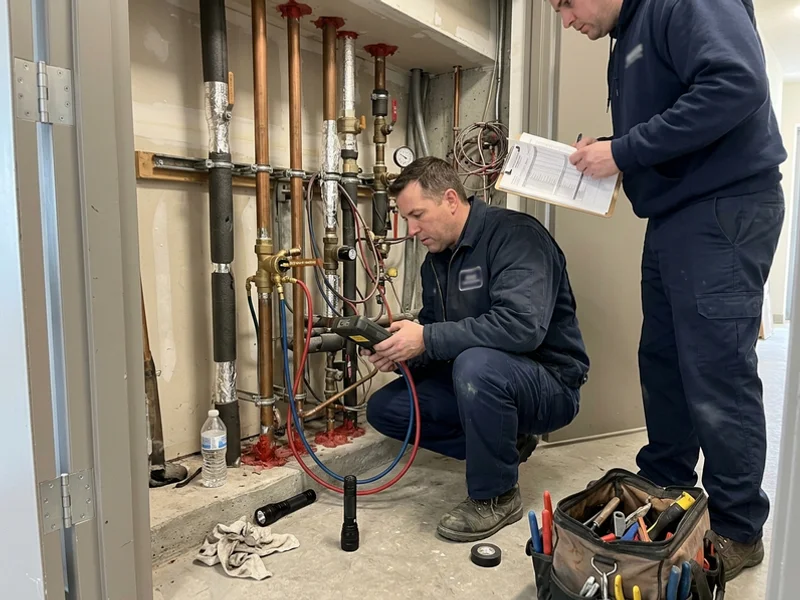
Technician reading a circuit setter with a differential pressure meter

Seeing one of these in your suite or building? A Site survey diagnostic tells you which one it is before anything is replaced.

Book a $185 Diagnostic
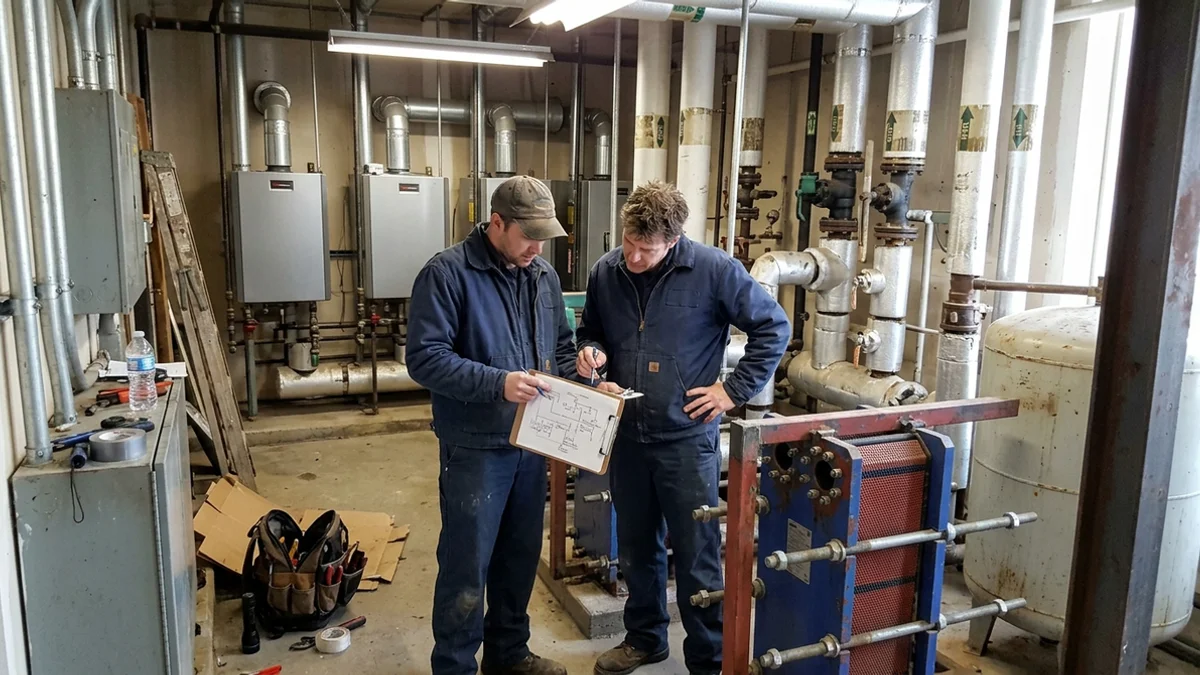
Condo mechanical room with heat exchanger, expansion tank and riser headers

Are your building’s heating and cooling costs creeping up every month? A slow, clogged vertical hydronic riser could be the hidden culprit behind those high bills.

We often see property managers and residents frustrated by inconsistent temperatures across different floors.

Solving this problem starts with a proper hydronic riser service.

Our team specializes in making this process completely painless for everyone involved. The next few paragraphs will explain exactly how to clean these vital systems without turning your building into a construction zone.

How a Riser Flush Works, Stack by Stack

A riser flush sounds like a massive headache, but it is mostly invisible to residents when planned well. Our team has perfected a process that keeps your building running smoothly.

In many Canadian cities, soft water creates a unique challenge. You might expect hard water limescale, but we are usually fighting black magnetite sludge and iron-oxide corrosion.

This thick sludge settles in pipes and cuts heat output significantly. We use targeted treatments to break down that specific buildup. Here is how one runs.

  1. Readings first. We take supply and return temperatures and pressure drops at sample suites on each stack, plus differential pressure at the circuit setters in the mechanical room. These numbers become the baseline.
  2. Notice and coordination. We draft the resident notice and walk the superintendent through the plan. Concierge staff know which stacks are affected and when.
  3. Isolate and drain. One riser at a time is isolated with its hydronic isolation ball valves and drained down to the flush points.
  4. Chemical circulation. A flush cart circulates an inhibited descaling chemical, like Hydro-Solv QC, through the riser and branch piping. Riser swing joints and coil connections are checked for leaks as the chemical works.
  5. Neutralize, flush and refill. The chemical is neutralized and flushed out, the riser is refilled with treated water, and air is vented at the top.
  6. Readings again. The same suites are measured again. The before and after numbers go into the written report.

Our preferred chemical cleaners contain organic corrosion inhibitors designed specifically for multi-metal systems. Using a safe product like PRO-TEK 922 protects the sensitive copper and aluminum components inside your walls. The final report gives your board the exact data needed to prove the investment was worth it.

Common Element or Suite Problem? How Riser Readings Help

Boards and owners often argue about who should pay when a suite is uncomfortable. Riser readings settle most of these conversations quickly.

We use hard data to eliminate the guesswork. If water arrives at the suite at the right temperature and flow, the problem is inside the suite.

If it does not, and the neighbours on the same riser show the same pattern, the problem is upstream in a common element. Our reports help property managers comply with the rules outlined in your province’s Condominium Act. For example, the Condominium Authority of Ontario notes that corporations are generally responsible for common elements like shared piping inside the walls.

ReadingWhat it suggestsUsually responsible
Good supply temperature, good flow at suite, poor comfortUnit fault: valve, motor, coil, controlsOwner (per declaration)
Low flow at several suites on one riserRiser scale, air or balancingCorporation
Wrong supply temperature building-widePlant, changeover or pump issueCorporation
Low flow at one suite only, others fineSuite strainer, valve or coil scaleOwner (per declaration)

This is why we put readings in writing. It lets the property manager apply the building’s standard unit declaration fairly.

We also give the board real data for their next reserve fund study. This proactive step stops owners from paying for fan coil repairs that would never have fixed a riser problem.

Buildings with water-source heat pumps benefit the most from a clean system. A clean loop means fewer heat pump lockouts across every suite.

Our clients often report a noticeable drop in emergency maintenance calls within the first month.

Get Your Hydronic System Flowing

A healthy riser system is the foundation of a comfortable building. We are ready to help you lower energy costs and stop the resident complaints. A simple reading is all it takes to spot the problem.

Contact our team today to schedule an initial inspection.
Why Choose Condo HVAC Repair Toronto for Riser Service?

Numbers before and after

Every riser job starts and ends with flow and temperature readings at sample suites, so the board can see what changed.

Shutdowns that residents accept

We draft the shutdown notice, coordinate with the superintendent and keep each stack offline for hours, not days.

Building side vs suite side

Riser readings tell owners and management which complaints belong to the corporation and which to the suite.

Reserve fund ready reports

A written report with readings, findings and recommended next steps, formatted for the reserve fund study and board minutes.

Full mechanical room scope

Pumps, plate and frame heat exchangers, expansion tanks, glycol loops, air vents and valves, all from one crew.

Fewer suite callbacks

A clean, balanced loop means fewer clogged strainers, fewer heat pump lockouts and fewer cold-suite complaints the next season.

How Our Riser Service Visit Works

Four steps, the same on every job, so property managers and owners know what happens next.

  1. 1

    Walk-Through & Superintendent Meeting

    COI to management, mechanical room review with the superintendent and a list of suites with complaints.

  2. 2

    Flow & Pressure Diagnostic

    Unlike crews who flush on a guess, we read flow, temperature and differential pressure across risers before recommending anything.

  3. 3

    Written Scope & Shutdown Plan

    Itemized CAD scope, draft resident notice and a stack-by-stack shutdown schedule for board approval.

  4. 4

    Work, Readings & Report

    We complete the work, re-measure at the same suites and deliver a written report for the reserve fund file.

How Much Does Riser Flushing and Pump Work Cost in Toronto?

Riser work is priced per building after a site survey. Loop flushes run $3,500 to $12,000, and primary pump replacement $2,400 to $8,500. Balancing and air vent work often costs less than either.

Balancing & Air Service

$1,200-$3,500

Often the first step

  • Circuit setter readings and rebalance
  • Air vent service or replacement
  • Expansion tank check and recharge
  • Written readings
Book a Diagnostic
Most booked

Loop Flush per Building

$3,500-$12,000

Chemical descale and flush

  • Shutdown notice drafted
  • Flush cart and chemistry
  • Neutralize, flush and refill
  • Before and after report
Book a Diagnostic

Primary Pump

$2,400-$8,500

Matched to system curve

  • Pump and motor assessment
  • Replacement and alignment
  • Standby pump coordination
  • Startup readings
Book a Diagnostic

What moves your riser service quote

  • Number of risers and building height
  • Pipe material, age and how long since the last flush
  • Condition of isolation valves at riser bases
  • 2-pipe, 4-pipe or water-source loop design
  • Shutdown windows allowed by the board

All prices CAD before HST. Site surveys and walk-throughs are free for property managers and boards. Findings are delivered in a written report.

Full published price list

Published condo HVAC pricing in Canadian dollars
Service TypeDiagnosticRepair BandReplacement
Condo HVAC Diagnostic $185 $280-$2,400 Scope quoted
Condo AC Repair $185 $320-$1,650 $1,800-$4,200
Fan Coil $280 $450-$1,800 $2,800-$6,500 per unit
Condo Heat Pump $240 $650-$2,400 $4,500-$8,500 per unit
Magic-Pak PTAC Included Parts quoted $4,800-$7,500 per unit
Hydronic Riser Site survey Pump $2,400-$8,500 Flush $3,500-$12,000
Building-Wide Program Free audit $2,800-$8,500 per unit $85K-$2.4M

After-hours or weekend diagnostic $285. Service contracts: 1 visit per unit per year $185-$240, 2 visits per unit per year $320-$420. All prices CAD, before HST.

What Clients Say About Our Riser Service

Reviews from owners, managers and boards who booked this service. First name, last initial and neighbourhood only.

"Our north risers had been cold for three winters. They measured every stack first and showed the board the numbers. After the flush the top floors finally heat up properly. Shutdown was about 3 hours per stack."
Andre B., Scarborough City Centre Superintendent | Riser Flush, 1984 tower $9,800
"They wrote the shutdown notice for us, posted it, and showed up exactly when the notice said. The report afterwards went straight into our reserve fund update. Easy to work with."
Diane R., Yonge-Eglinton Property manager | Loop Balancing + Air Vents $2,700
"Primary pump seized on a Sunday in February. Standby was carrying it but barely. They had a replacement Taco pump in by Tuesday and gave us a proper startup sheet. Would definately call again."
Mark J., Etobicoke City Centre Facilities director | Primary Pump Replacement $6,400

Vertical Hydronic Riser Service FAQs

Twelve questions we hear most about riser service in Toronto condos.

How much does a riser flush cost?

A chemical riser descaling and flush runs $3,500 to $12,000 per building. The price depends on the number of risers, building height, pipe condition and how much scale there is. We price it after a free walk-through with flow readings, and the written scope includes the shutdown notice and before and after report.

How often should risers be flushed?

There is no single interval for every building. Many Toronto towers benefit from a flush every 10 to 15 years, sooner if water treatment has been inconsistent. Rising strainer clogs, cold upper floors and narrowing temperature splits at the coil are the signs it is time. Readings tell you better than the calendar.

Why are suites on one stack cold?

Common causes are scale in that riser, air trapped at the top, a balancing valve set too far closed, or a failed isolation valve. We measure flow and pressure across the riser and compare it with the others to find which one it is.

How long is the water shut off?

For a typical flush, each riser is isolated for a few hours. Larger buildings are done stack by stack over 1 to 3 working days, so most residents only lose heating or cooling for part of one day. The notice tells them exactly when.

Do residents need to be home?

Usually not for a riser flush, since the work happens in the mechanical room and at riser drain points. Some suites may need access to bleed air from their unit afterward, which we arrange through management with a suite entry notice.

Do you draft the shutdown notice?

Yes. We write the resident notice with dates, times, affected stacks and what residents should expect, and send it to management for posting. We also brief the superintendent and concierge before the work starts.

Flush or rebalance?

If flow is restricted across a whole riser and strainers keep clogging, a flush is usually needed. If the problem moves around or affects scattered suites, rebalancing and air removal often fix it for much less. We measure first and recommend the cheaper option when it will do the job.

Can you replace the primary pump?

Yes. We assess and replace primary circulating pumps, matching the new pump to the system curve, aligning couplings and recording startup readings. Where there is a standby pump, we plan the swap so the building stays in service.

Is the riser a common element?

In most Toronto condominiums, the risers, building pumps and central plant are common elements maintained by the corporation. Your declaration and any standard unit by-law have the final say, and we can point management to what our readings show.

Do you provide a report for the reserve fund study?

Yes. Every riser job ends with a written report covering readings before and after, what was found, what was done and what we recommend next, with rough timing and cost bands that reserve fund planners can use.

Do you work in Scarborough Centre towers?

Yes. Scarborough Centre has many 1980s towers with original risers and pumps, and our Scarborough team handles flushes, pump work and valve replacements there regularly.

What warranty applies?

Our written workmanship warranty applies to all riser and pump work, and new pumps and valves carry their manufacturer warranties. The terms are in your scope and on your invoice.

Still have a question about your suite or building?

Most calls touch more than one system. These are the services that usually come up alongside riser service.

Serving condos in Downtown Toronto, North York, Scarborough, Etobicoke, Mississauga, Vaughan, Markham and Oakville.

24-Hour Condo Emergency Dispatch

Find Out What Your Risers Are Really Doing

A free walk-through with flow readings shows whether your building needs a flush, a rebalance or just air removal, before anyone books a shutdown.

  • Written scope before work
  • TSSA + Enbridge Red Tag + ESA + WSIB
  • Written workmanship warranty
Call (647) 294-5454 Book $185 Diagnostic